



What's Happening?
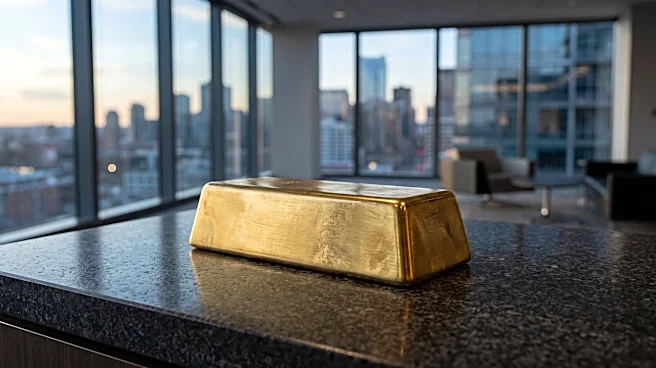
Following the U.S. midterm elections, spot gold has increased by approximately 4% and spot silver by over 5%. This upward trend in precious metals comes as investors receive conflicting signals regarding their future trajectory. Goldman Sachs recently
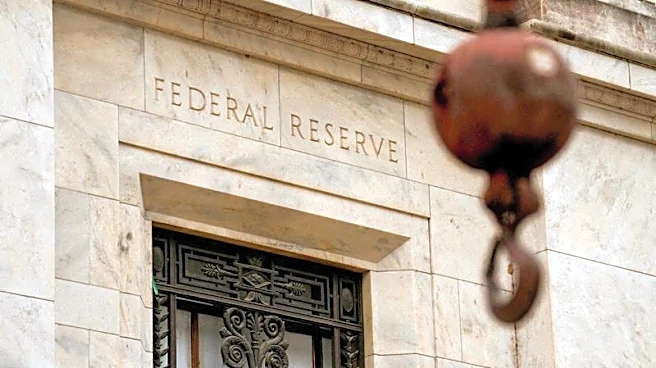
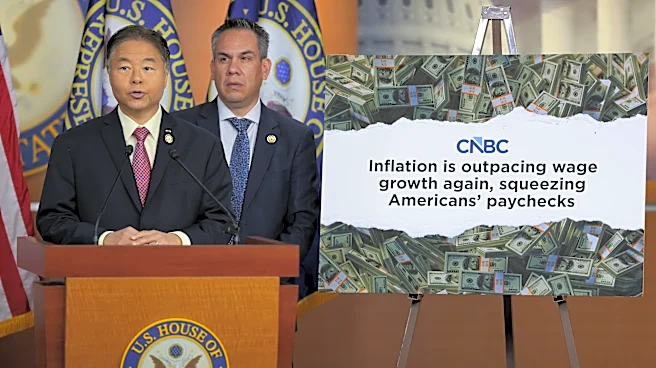
lowered its gold price targets for year-end 2026 to $4,150 an ounce from $4,650, and for year-end 2027 to $4,800 from $5,400. This adjustment is attributed to a hawkish shift in the Federal Reserve's stance and its impact on investor positioning. Conversely, economist Peter Schiff suggests that potential increased government spending, more regulation, larger budget deficits, and higher inflation, particularly under a Democratic-controlled Congress, would be bullish for gold. At the time of writing, spot gold was trading at $4,055.35 an ounce, and spot silver at $53.32 an ounce. Retail sentiment on Stocktwits was neutral for gold and bullish for silver.
Why It's Important?
The divergent outlooks from major financial institutions like Goldman Sachs and economists such as Peter Schiff highlight the complex factors influencing precious metal markets in the U.S. A hawkish Federal Reserve typically implies higher interest rates, which can make non-yielding assets like gold less attractive. However, the prospect of increased government spending and inflation, as suggested by Schiff, could drive investors towards gold and silver as hedges against economic uncertainty and currency devaluation. This dynamic creates a challenging environment for investors trying to position themselves in the commodities market. The performance of gold and silver often reflects broader economic anxieties and expectations regarding monetary policy and fiscal health, making their movements significant indicators for the U.S. economy.
What's Next?
The market will closely monitor upcoming economic data, particularly U.S. CPI reports, which could significantly influence the next moves for gold and silver prices. A softer dollar, as seen recently, tends to lift precious metals, but strong inflation data could fuel a rally in the U.S. dollar index, potentially triggering a correction in metals. Conversely, softer inflation might lead to a correction in the U.S. dollar index and a rally in gold and silver. Goldman Sachs maintains a constructive longer-term view on gold, tied to strong central bank buying, expecting purchases of 60 tonnes a month through 2026 and 2027. They also anticipate further price support once the Federal Reserve begins cutting rates in the second half of 2027, with higher oil prices potentially adding pressure through systematic selling.
Beyond the Headlines
The current situation in the gold and silver markets underscores a deeper debate about the future direction of the U.S. economy and the role of government policy. The differing perspectives from Goldman Sachs and Peter Schiff reflect fundamental disagreements on the impact of monetary and fiscal policies. Goldman's focus on the Federal Reserve's hawkish stance and interest rates points to a belief in the central bank's ability to control inflation and stabilize the economy. Schiff's emphasis on government spending and deficits, however, suggests a concern about long-term inflationary pressures and the potential for currency debasement. This divergence highlights the ongoing tension between traditional monetary policy tools and the broader implications of fiscal decisions on asset valuations and investor confidence.