








What's Happening?
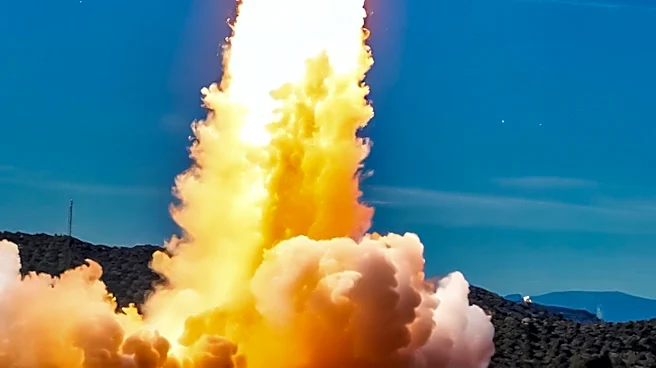
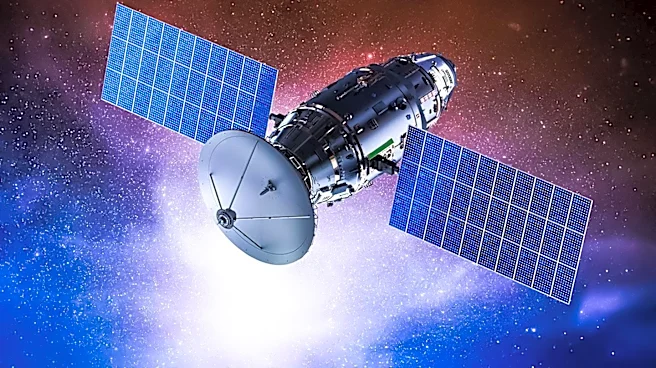
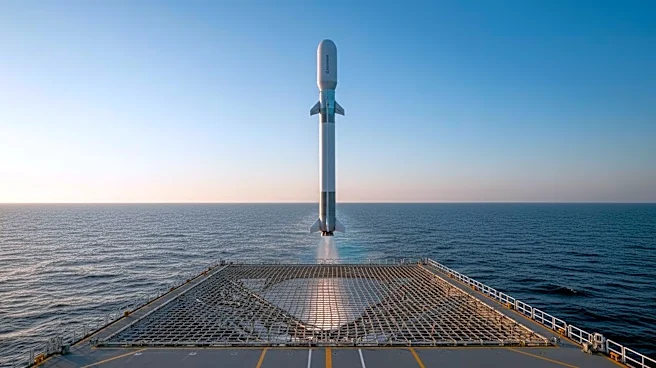
The commercial space sector is on the brink of significant expansion, with projections indicating the launch of approximately 16,900 small satellites between 2026 and 2035. This growth is driven by the increasing demand for sovereign satellite constellations
and the expansion of commercial space networks. The Office of Space Commerce (OSC) is actively involved in regulating these novel commercial space activities, which often fall outside the traditional regulatory scope of the FAA, OSC’s Office of Commercial Remote Sensing Regulatory Affairs (CRSRA), or the FCC. Companies like Reflect Orbital have already received clearances from the FCC to deploy in-orbit mirrors, highlighting the dynamic regulatory landscape. The small satellite market is expected to grow from USD 4.43 billion in 2024 to USD 14.08 billion by 2033, with a compound annual growth rate (CAGR) of 13.7%.
Why It's Important?
The anticipated surge in small satellite launches represents a transformative shift in the space industry, with significant implications for global communications, Earth observation, and defense capabilities. Small satellites, typically under 500 kilograms, have revolutionized space economics by reducing manufacturing costs and accelerating development cycles. This growth is not only driven by commercial interests but also by national and regional space efforts, which are becoming increasingly prominent. The sector's expansion is supported by substantial private investment, with USD 11.5 billion in funding directed towards small satellite programs in 2025 alone. This investment underscores strong confidence in the long-term commercial value of small satellite technologies, which are expected to remain a key driver of space industry growth.
What's Next?
The next decade will likely focus on the efficient deployment and scaling of small satellite constellations. As the market matures, execution, manufacturing scale, and sustained customer demand will become critical factors in determining industry leaders. The development of more capable platforms with enhanced payload capacity and power generation will be essential to meet the growing demand for advanced satellite services. Additionally, the integration of electric propulsion systems, which can reduce mission costs by 30-40%, will become increasingly standard for small satellites designed for multi-year operations. The continued evolution of propulsion systems, onboard autonomy, and constellation designs will ensure that small satellites remain central to future growth in the global space economy.