




What's Happening?
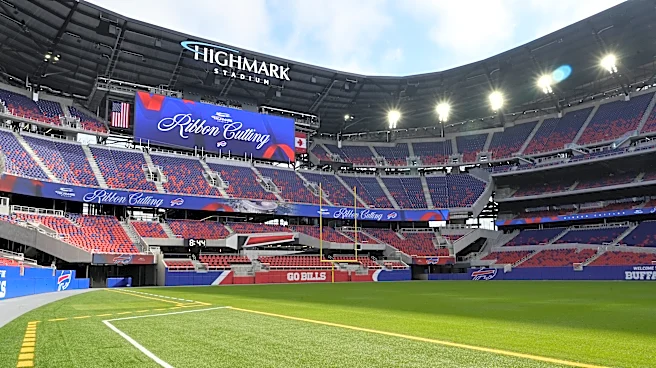
The Buffalo Bills are replacing the natural grass playing surface at Highmark Stadium because it did not meet the team's standards. This decision comes despite the team's extensive experience maintaining two full-length outdoor grass practice fields at One
Bills Drive, which players consistently praise for their quality. Quarterback Josh Allen and center Connor McGovern have both expressed a preference for natural grass, citing its benefits for player health and injury prevention. Allen noted that practicing on artificial turf causes him to feel soreness the next day, while natural grass allows him to feel better. The grounds crew is continuously refining its approach to managing the grass at Highmark Stadium, acknowledging that even the newly installed field will require replacement at some point during the season. This ongoing process involves learning and tweaking techniques with each new field installation to achieve optimal playing conditions.
Why It's Important?
The decision by the Buffalo Bills to replace the grass at Highmark Stadium underscores the critical importance of playing surface quality in professional sports, particularly for player safety and performance. The preference for natural grass among players like Josh Allen highlights a broader concern within the NFL regarding the impact of playing surfaces on athletes' bodies and long-term health. This move could influence other teams and stadium operators to re-evaluate their field maintenance practices and consider the benefits of natural grass over artificial turf, especially given player feedback on injury prevention and recovery. The ongoing investment in replacing and refining the grass surface also reflects a commitment by the Bills organization to prioritize player well-being, which can be a significant factor in attracting and retaining top talent. It also emphasizes the complex challenges involved in maintaining high-quality natural grass in varying environmental conditions.
What's Next?
The Buffalo Bills' grounds crew will continue to monitor and manage the newly installed grass field at Highmark Stadium, making adjustments as needed throughout the season. This ongoing process will involve continuous learning and refinement of their maintenance techniques to ensure the playing surface meets the team's high standards. The team will likely gather feedback from players and coaching staff regarding the new field's performance and its impact on player health. This situation may also prompt further discussions within the NFL about best practices for field maintenance and the optimal playing surfaces for player safety. Other teams facing similar challenges with their playing fields might look to the Bills' experience for insights into managing natural grass surfaces effectively, potentially leading to broader changes in stadium field management across the league.
Beyond the Headlines
The recurring need to replace the natural grass at Highmark Stadium, despite the team's expertise with practice fields, highlights the complex interplay of environmental factors, usage demands, and specific stadium conditions that affect turf quality. This situation points to the significant operational costs and logistical challenges associated with maintaining premium natural grass fields in professional sports venues. Beyond the immediate impact on player health, the ongoing effort reflects a broader commitment to sports science and athlete welfare, where even the playing surface is seen as a critical component of performance optimization and injury mitigation. This continuous refinement process could also drive innovation in turf management technologies and agricultural science applied to sports, as grounds crews seek more durable and resilient grass varieties or advanced maintenance techniques to meet the rigorous demands of professional football.