









What's Happening?
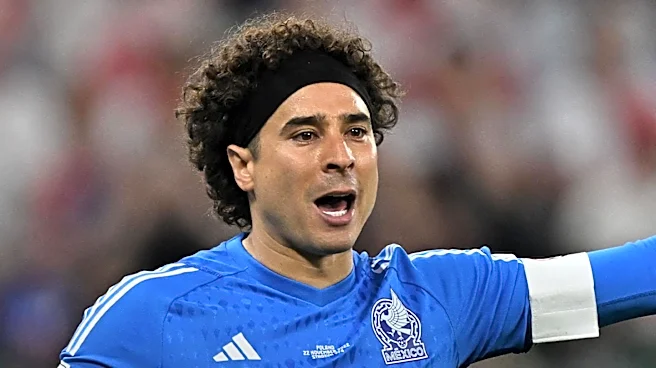
Mexico's national soccer team, led by coach Javier Aguirre, faced a challenging World Cup campaign, ultimately ending in a 3-2 defeat to England in the Round of 16. Despite playing on home soil and having strong performances from players like Erik Lira
and Gilberto Mora, Mexico was unable to advance past this stage, a barrier they have not overcome since 1986. The team had hoped to leverage their role as co-hosts to make a deeper tournament run, but the loss marked their eighth exit at this stage since 1994. Aguirre, who took over the team in 2024, managed to unite the players and win back the support of fans, achieving a top 10 world ranking and securing victories in the Nations League and Gold Cup. However, the team struggled against England's elite players, highlighting the ongoing challenges faced by Mexican soccer.
Why It's Important?
The outcome of Mexico's World Cup campaign underscores the persistent challenges within Mexican soccer, particularly the lack of depth and development in the domestic league. Liga MX's focus on foreign signings over local talent development has been criticized, as it limits the growth of homegrown players. This structural issue affects the national team's ability to compete at the highest levels, as seen in their inability to break through the Round of 16 barrier. The team's performance also reflects broader concerns about the competitiveness of Mexican soccer on the international stage, impacting the country's reputation and potential for future success. The appointment of Rafael Márquez as the new coach brings hope for change, as he aims to address these systemic issues and build on the foundation laid by Aguirre.
What's Next?
With Rafael Márquez taking over as head coach, the focus will shift to developing a more competitive team capable of advancing further in future tournaments. Márquez's familiarity with the team and his experience as a former player could bring new strategies and improvements. The Mexican Football Federation may need to reassess its approach to player development and league structure to foster a more robust talent pool. Additionally, the team's performance in upcoming international competitions will be closely watched as a measure of progress under Márquez's leadership. The ongoing support from fans and the potential for more players to gain experience in European clubs could also play a crucial role in shaping the future of Mexican soccer.
Beyond the Headlines
The challenges faced by the Mexican national team highlight broader issues within the country's soccer infrastructure, including the need for systemic reforms in Liga MX. The league's current structure, which prioritizes foreign players and lacks promotion and relegation, limits the competitive environment necessary for player development. Addressing these issues could lead to a more sustainable and successful national team. Furthermore, the cultural significance of soccer in Mexico means that the team's performance has a profound impact on national pride and identity. As such, efforts to improve the team's competitiveness are not just about sports but also about fostering a sense of unity and achievement among the Mexican people.