




What's Happening?
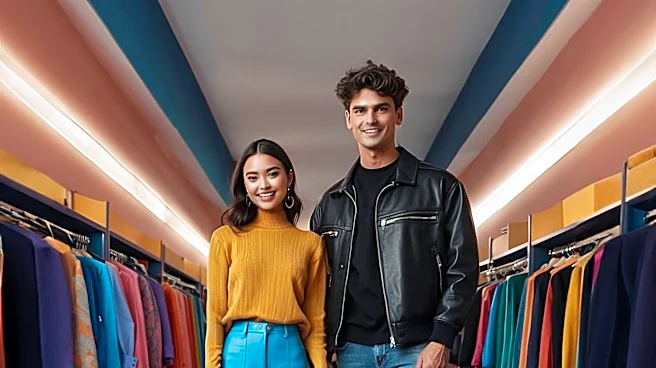
Younger shoppers, particularly Gen Z, are increasingly embracing secondhand fashion and goods, moving beyond mere affordability to prioritize individuality and self-expression. A report from Savers Value Village indicates that over 40% of Gen Z consumers
are thrifters, with nearly 60% of these individuals reporting that secondhand clothing constitutes more than a quarter of their wardrobe. This demographic also engages in thrifting regularly, with 60% of Gen Z thrifters making purchases at least once a month. The trend extends beyond apparel to include a wide array of items such as books, furniture, home decor, electronics, and kitchenware, with approximately 8 out of 10 surveyed consumers having bought at least one type of secondhand item outside of clothing. This shift highlights a broader change in consumer habits, where secondhand shopping is becoming a routine part of their purchasing rotation rather than an occasional alternative.
Why It's Important?
This growing preference for secondhand goods among younger consumers has significant implications for the U.S. retail industry and broader economic landscape. The shift challenges the traditional fast fashion model, potentially leading to reduced demand for new, mass-produced clothing and other items. For retailers, this means a need to adapt to changing consumer values, possibly by integrating more sustainable practices or exploring their own resale channels. The rise of secondhand markets also fosters a more circular economy, promoting reuse and reducing waste, which aligns with increasing environmental consciousness. Businesses involved in the resale market, from physical thrift stores to online platforms, stand to gain substantially from this trend. Conversely, traditional retailers focused solely on new products may face declining sales if they do not innovate to meet the evolving preferences of these influential consumer groups. The emphasis on individuality and unique finds also suggests a move away from homogenous consumption patterns, encouraging a more diverse and personalized retail environment.
What's Next?
The continued growth of the secondhand market is likely to prompt further innovation in retail and consumption. We can expect to see more mainstream retailers exploring partnerships with resale platforms or launching their own pre-owned collections to capture this market segment. Technology will also play a crucial role, with advancements in online resale platforms making it even easier for consumers to buy and sell used items. This trend could also lead to increased investment in repair and refurbishment services, extending the lifespan of products and further supporting a circular economy. Additionally, as more consumers become comfortable with secondhand purchases, there may be a greater demand for transparency and authentication in the resale market, particularly for higher-value items. This could lead to the development of new standards and certifications for pre-owned goods, enhancing consumer trust and driving further adoption.
Beyond the Headlines
The surge in secondhand consumption reflects deeper cultural and ethical shifts, particularly among younger generations. It signifies a growing rejection of disposable consumerism and an embrace of more sustainable and conscious living. This movement is not just about saving money; it's about making a statement against the environmental impact of fast fashion and the desire for unique items that reflect personal style rather than fleeting trends. The act of thrifting also offers a tangible, in-person experience that online shopping often lacks, fostering a sense of discovery and connection. This cultural shift could lead to a re-evaluation of what constitutes 'value' in consumer goods, moving beyond newness to encompass durability, uniqueness, and environmental footprint. It also highlights a generational divide in consumption habits, with younger consumers leading the charge towards a more sustainable and individualized approach to shopping.