








What's Happening?
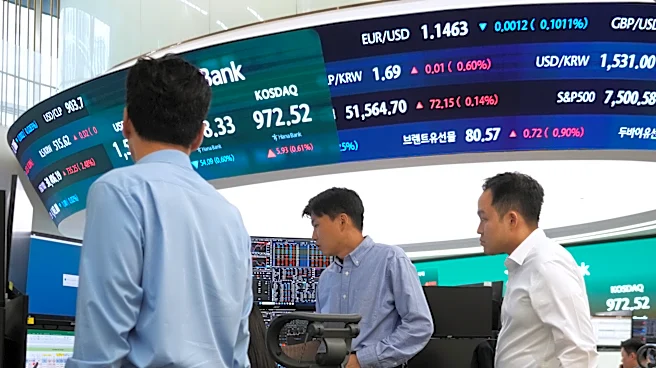
South Korea's Kospi index experienced a significant decline, closing nearly 10% lower, marking its worst single-day drop in over three months. This downturn was primarily driven by a global sell-off in tech stocks, particularly those related to artificial
intelligence. Major South Korean companies like Samsung Electronics and SK Hynix saw their shares fall by over 12%. The sell-off was part of a broader trend affecting global markets, with the Nasdaq 100 and S&P 500 also experiencing declines. The semiconductor sector, which had seen substantial gains earlier in the year, was particularly hard hit as investors moved away from high-flying tech stocks to more stable investments.
Why It's Important?
The sharp decline in the Kospi index highlights the volatility and risks associated with tech stocks, especially those linked to artificial intelligence. This sell-off could signal a shift in investor sentiment, potentially impacting the broader tech industry and related sectors. The downturn in South Korea's market, a key player in the global semiconductor industry, could have ripple effects on international markets and economies. Companies heavily invested in AI and tech may face increased scrutiny and pressure to deliver consistent returns, while investors might seek safer, more predictable investments.
What's Next?
The market's reaction to this sell-off will be closely watched by investors and analysts. There may be increased volatility in tech stocks as investors reassess their positions. Companies in the semiconductor and AI sectors might need to adjust their strategies to maintain investor confidence. Additionally, global economic factors, such as interest rates and geopolitical tensions, could further influence market dynamics. Stakeholders will likely monitor these developments to gauge the long-term impact on the tech industry and broader economic trends.