







What's Happening?
The union representing over a thousand supervisors and employees at Chile's Escondida copper mine is currently in salary negotiations with BHP Group, aiming to avert a potential strike. Union president Alexis Barrera has indicated a possibility of reaching
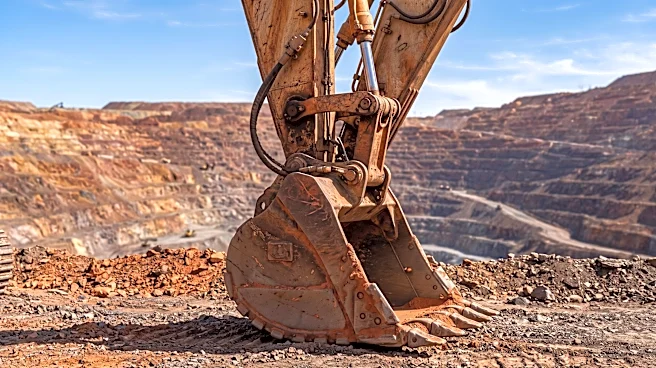
an agreement. Previously, the union had announced a breakdown in talks and threatened to initiate a strike. However, the deadline for mediation negotiations has been extended beyond the original midnight cutoff. BHP Group, headquartered in Melbourne, Australia, is the world's largest mining company by market value, with a market capitalization of approximately $216.39 billion. The company operates primarily within the Metals & Mining industry, with a diverse portfolio including iron ore, copper, metallurgical coal, and potash. The Escondida mine is a significant contributor to BHP's revenues, and any disruption due to a strike could impact the company's operational stability and financial performance.
Why It's Important?
The ongoing negotiations at the Escondida copper mine are crucial for the global copper market and for BHP Group's financial stability. As the world's largest copper mine, Escondida plays a significant role in the supply of copper, a vital commodity for various industries, including electronics, construction, and renewable energy. A strike could lead to disruptions in copper supply, potentially affecting global prices and the industries reliant on this metal. For BHP Group, a strike would directly impact its revenues and profitability, given the mine's substantial contribution to its copper production. The company's stock is currently considered overvalued by approximately 33.6% according to the GF Value™ verdict, and insider activity shows a significant sell-off, indicating potential caution among investors. A prolonged strike could exacerbate these concerns and negatively affect investor confidence in BHP's stock.
What's Next?
The immediate next step involves the continuation of salary negotiations between the Escondida mine union and BHP Group. The extension of the mediation deadline suggests a willingness from both sides to find a resolution, potentially averting a strike. Investors will be closely monitoring the outcome of these talks, as a successful agreement would alleviate immediate concerns about operational disruptions and their impact on copper supply and BHP's financial performance. Conversely, a failure to reach an agreement could lead to a strike, with potential consequences for global copper prices and BHP's stock valuation. The company's GF Score™ of 67/100, indicating moderate overall performance with strengths in profitability and financial strength but weaknesses in growth, suggests that a strike could further challenge its growth prospects.
Beyond the Headlines
Beyond the immediate financial and operational implications, the negotiations at the Escondida mine highlight broader issues within the mining industry, particularly regarding labor relations and the balance between corporate profitability and worker demands. The outcome could set a precedent for future labor negotiations in the sector, influencing how mining companies approach employee compensation and working conditions. Furthermore, the reliance on a single large mine like Escondida for a significant portion of global copper supply underscores the vulnerability of critical commodity markets to localized labor disputes. This situation also brings to light the ethical considerations for investors, who must weigh attractive dividend yields against potential social and governance risks associated with labor unrest and the long-term sustainability of mining operations in resource-rich nations.