





What's Happening?
AMD is projecting more than 80% revenue growth in the coming year, primarily fueled by an accelerating demand for AI chips. This surge reflects a broader market trend where significant investments are being made in physical computing infrastructure to
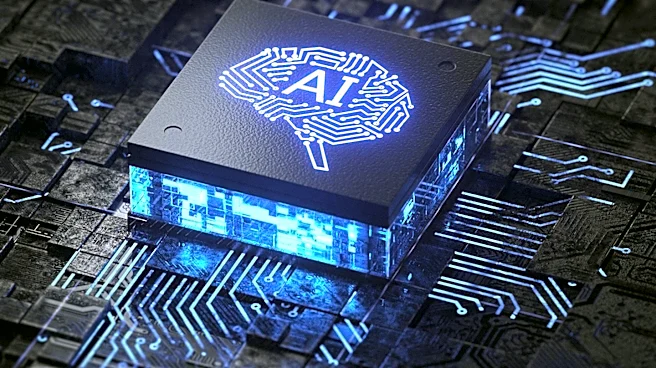
power AI applications across various industries. The increased demand for AI-focused processors is not a short-term phenomenon but indicates a sustained, long-term investment in AI-capable hardware throughout the technology stack. These specialized chips are crucial for training AI models, running inference at scale, and processing real-time sensor data, all of which require high-speed, low-latency parallel processing capabilities. The chip categories experiencing this revenue boom are the same ones integrated into essential modern supply chain technologies such as robotics, autonomous vehicles, edge computing devices, and IoT systems.
Why It's Important?
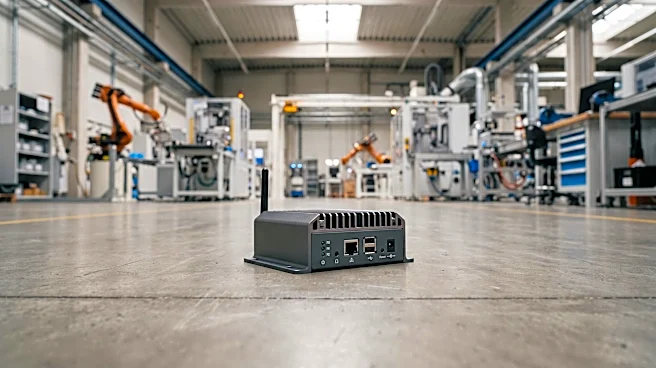
The explosive growth in AI chip demand has significant implications for U.S. industries, particularly those reliant on advanced hardware for their operations. Supply chain leaders, often viewing semiconductor news as a niche technology sector story, must recognize its direct impact on their physical operations. The hardware powering warehouses, freight yards, and sensor networks is directly downstream from this booming chip market. For instance, autonomous mobile robots (AMRs) depend on AI-optimized chip architectures for navigation and decision-making. IoT sensor networks increasingly rely on efficient edge AI chips for local data processing, reducing cloud dependency. Autonomous vehicles in logistics and vision-based quality inspection systems also require these powerful processors. This demand surge signals potential tightening in procurement cycles, extended lead times, and price shifts for related components, affecting operational planning and hardware upgrades across sectors.
What's Next?
Supply chain leaders and operations teams should anticipate longer procurement lead times for robotics and automation investments over the next 12 to 18 months. The high demand for AI-capable chips is likely to create constraints further down the hardware supply chain, potentially delaying the delivery of finished systems. When evaluating new automation platforms, businesses will need to inquire specifically about vendors' chip architectures and supply chain dependencies, as providers using AI-optimized processors may offer more capable systems but also face greater exposure to component availability dynamics. Furthermore, the trend towards more powerful AI chips designed for edge inference will strengthen the operational case for distributed processing in facilities, reducing latency and cloud reliance. Engaging hardware vendors early to understand their component sourcing and production capacity will become critical for ensuring supply chain resilience.
Beyond the Headlines
The AI chip boom signifies a fundamental shift in how physical operations are managed and optimized. Beyond immediate procurement challenges, this surge underscores the increasing sophistication and autonomy of industrial hardware. The enhanced capabilities of AI chips are enabling robots to navigate more reliably, sensors to process more data locally, and vision systems to detect defects with greater accuracy. This continuous improvement in hardware capabilities will compound over time, leading to more efficient, resilient, and intelligent supply chains. The strategic choice between edge and cloud processing will become more pronounced as edge AI chips become more capable, pushing computational power closer to the data source. This evolution could redefine operational architectures, reduce reliance on centralized cloud infrastructure for real-time decisions, and foster a new era of hyper-localized, AI-driven automation across various industries.