


What's Happening?
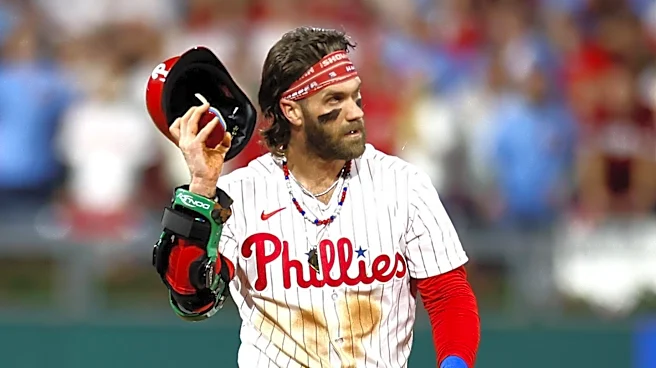
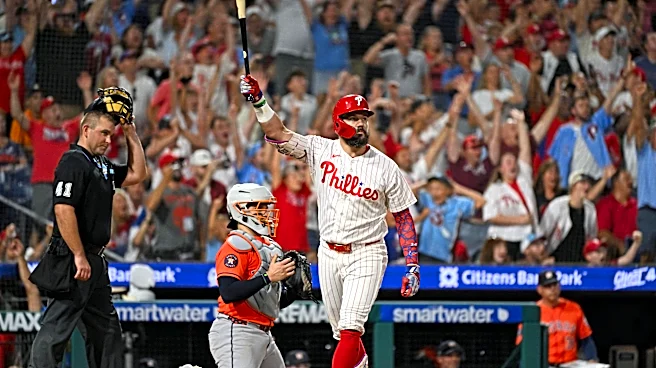
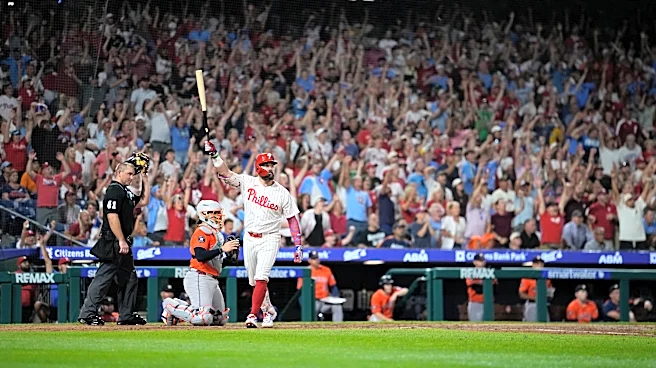
Philadelphia Phillies star Bryce Harper has publicly challenged a Major League Baseball (MLB) proposal that would mandate a two-week suspension for players selected for the 2028 Los Angeles Olympics who choose not to participate. Harper, known for his
outspoken stance on player rights, questioned the practicality and enforceability of such a penalty, particularly for star players whose absence could significantly impact their teams. He specifically cited Bobby Witt Jr. of the Kansas City Royals as an example, suggesting that ownership would likely oppose suspending a key player. This disagreement follows a previous contentious interaction between Harper and MLB Commissioner Rob Manfred regarding a potential salary cap, where Harper reportedly told Manfred to 'get the f--- out of our clubhouse.' The issue of player participation in the Olympics has been a long-standing point of contention between MLB and the players' union, with both sides publicly advocating for international growth while disagreeing on the extent of MLB's control over player involvement.
Why It's Important?
Bryce Harper's vocal opposition to MLB's proposed Olympic suspension policy highlights a significant ongoing power struggle between the league and its players, particularly concerning player autonomy and collective bargaining rights. This dispute is crucial as MLB and the players' union are currently engaged in negotiations for a new collective bargaining agreement (CBA). Harper's comments add a prominent voice to the debate, potentially influencing the union's stance and strengthening player resistance to league mandates. The outcome of this issue could set a precedent for how MLB manages player participation in international events and other non-league obligations in the future. It also underscores the tension between the league's desire to promote baseball globally through events like the Olympics and players' concerns about their individual rights, health, and team commitments. The resolution of this conflict will impact player-management relations and potentially the structure of future CBAs.
What's Next?
The debate surrounding MLB's proposed Olympic suspension policy is expected to intensify as the 2028 Los Angeles Olympics approach and as collective bargaining agreement negotiations continue. Bryce Harper's public comments will likely galvanize other players and the players' union to push back against the league's proposal. The union will need to decide whether to accept, modify, or reject the proposed penalty, potentially making it a key point of contention in ongoing CBA discussions. MLB, in turn, will have to weigh the benefits of mandatory Olympic participation against potential player backlash and the practical challenges of enforcing suspensions on star athletes. The resolution could involve a compromise, such as incentives for participation rather than penalties for non-participation, or a more structured agreement on how players are selected and compensated for international duties. The outcome will significantly shape the future relationship between MLB and its players.
Beyond the Headlines
The conflict over Olympic participation and potential suspensions delves into the fundamental question of player agency versus league control in professional sports. While MLB aims to expand its global footprint and leverage the Olympics for international growth, players like Harper are asserting their right to choose, especially when it impacts their careers and team commitments. This tension reflects a broader trend in professional sports where athletes are increasingly advocating for greater control over their careers and bodies. The ethical dimension of compelling participation through punitive measures, even for a prestigious event like the Olympics, raises questions about fair labor practices and the balance of power in sports contracts. The outcome of this dispute could influence how other professional sports leagues approach international competitions and player obligations, potentially leading to more player-centric policies or, conversely, strengthening league authority. It also highlights the evolving role of star athletes as influential voices in labor discussions.