






What's Happening?
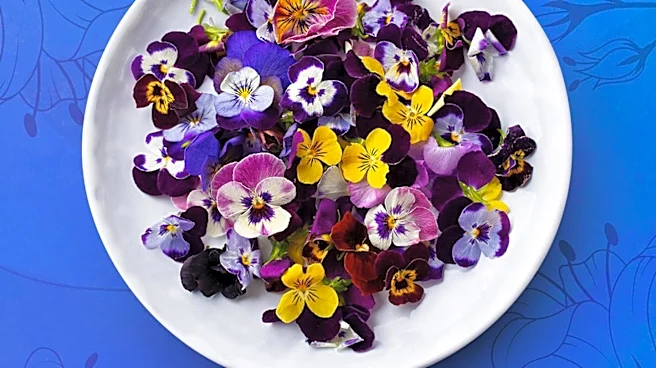
Edible flowers are increasingly being utilized in various culinary and decorative contexts, enhancing both the aesthetic and flavor profiles of dishes. Modern presentation trends in food and beverage, as highlighted by sources, frequently incorporate
edible flowers for minimalistic plating, vertical stacking, and overall sophistication. For instance, Fresh Origins, a major grower and supplier in the U.S., offers a wide array of edible flowers and Petite® Greens, such as Petite® Burgundy Eclipse™, which are valued for their vivid coloring, crisp texture, and mild flavoring. These specialty greens are larger than microgreens but smaller than mature leaves, providing a tender consistency with robust flavors. They are grown in San Diego, California, using traditional farming methods and are available year-round, allowing chefs to maintain consistent menu offerings. Beyond savory dishes, edible flowers like roses, peonies, and orchids are also popular choices for adding natural charm and sophistication to birthday cakes.
Why It's Important?
The growing trend of incorporating edible flowers into cuisine signifies a shift towards more visually appealing and sophisticated food presentations in the U.S. culinary industry. This trend impacts restaurants, catering services, and even home cooking, as consumers seek unique and aesthetically pleasing dining experiences. For suppliers like Fresh Origins, this demand translates into a robust market for specialty produce, supporting agricultural innovation and local economies in regions like San Diego. The year-round availability of products like Petite® Burgundy Eclipse™ ensures a consistent supply chain for chefs, enabling them to integrate these elements into their menus without seasonal limitations. Furthermore, the emphasis on natural charm and unique flavors provided by edible flowers can elevate the perceived value and quality of food products, potentially influencing consumer preferences and market demand for gourmet ingredients.
What's Next?
The continued integration of edible flowers into mainstream culinary practices is anticipated, with potential for further innovation in their application. Chefs and food developers may explore new varieties and combinations of edible flowers to create novel flavor profiles and visual effects. The market for specialty produce, including edible flowers and Petite® Greens, is likely to expand, driven by consumer interest in unique and high-quality ingredients. Educational initiatives for culinary professionals and home cooks on the safe and effective use of edible flowers could also become more prevalent. Additionally, research into the nutritional properties of various edible flowers, similar to the general understanding of microgreens, could further enhance their appeal and justify their inclusion in health-conscious diets.
Beyond the Headlines
The rise of edible flowers in cuisine extends beyond mere aesthetics, touching upon broader themes of sustainability, local sourcing, and the evolving relationship between food and art. The cultivation of specialty greens and edible flowers by companies like Fresh Origins highlights the importance of controlled agricultural environments and traditional farming methods in producing high-quality, consistent products. This trend also encourages a deeper appreciation for botanical diversity and the potential of natural ingredients to transform culinary experiences. Ethically, the sourcing and production of edible flowers must adhere to food safety standards, ensuring that these decorative elements are not only beautiful but also safe for consumption. Culturally, the incorporation of flowers into food can be seen as a revival of ancient traditions, where flowers held symbolic and medicinal significance, now reinterpreted for modern gastronomic delight.