




What's Happening?
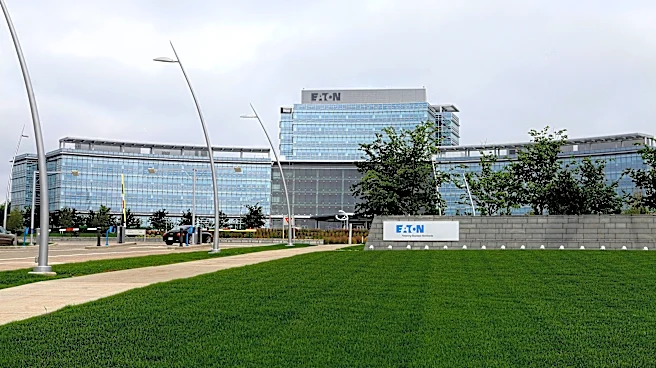
Eaton, a global power management company, announced record third-quarter 2026 sales of US$8,947 million. The company has also issued higher full-year earnings guidance, signaling strong performance despite facing gross margin pressures from increased
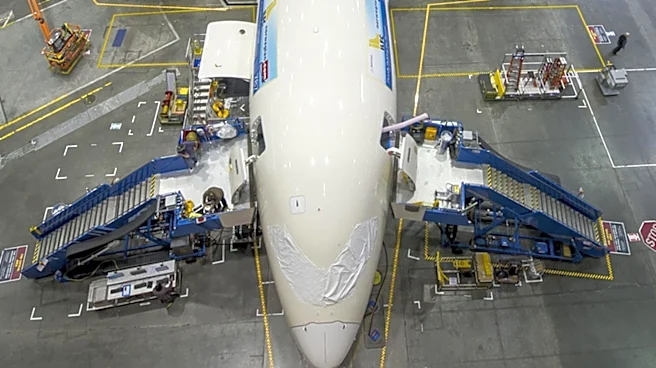
commodity costs and ongoing factory expansions. A significant driver of this success is its aerospace division, which continues to secure high-value contracts for next-generation aircraft platforms. Notably, Dassault Aviation selected Eaton's hydraulic power and fuel systems for its new Falcon 10X jet, underscoring the division's competitive edge. The company's updated full-year 2026 earnings guidance now projects net income per diluted share between US$10.39 and US$10.49, with a fourth-quarter range of US$3.28 to US$3.38. This positive outlook is set against the backdrop of Eaton's strategic investments in grid, data center, and aviation programs, which are central to its growth narrative.
Why It's Important?
Eaton's robust financial performance and optimistic outlook are significant for the U.S. industrial and aerospace sectors. The company's ability to achieve record sales and raise earnings guidance despite inflationary pressures on commodity costs demonstrates resilience and effective management in a challenging economic environment. Its success in securing contracts for advanced aerospace platforms, such as the Falcon 10X, highlights the U.S. aerospace industry's continued innovation and global competitiveness. This also indicates a healthy demand for sophisticated aerospace components, which can translate into job creation and economic stability within the manufacturing sector. Investors will be closely watching how quickly Eaton can rebuild its gross margins as pricing adjustments and capacity expansions take full effect, as this will influence future profitability and shareholder value. The company's strategic focus on power grid and data center infrastructure also positions it to benefit from broader trends in electrification and digital transformation.
What's Next?
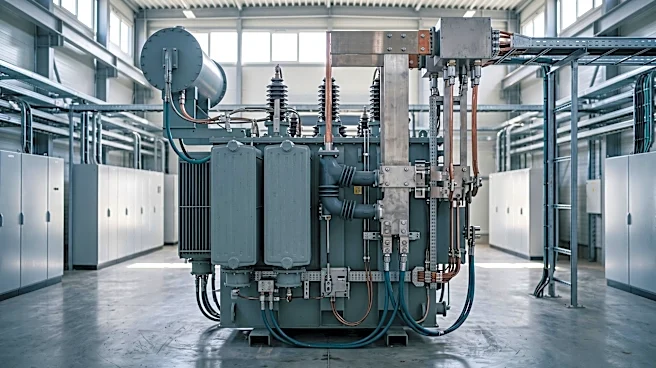
Eaton's immediate focus will be on executing its expansion programs and managing its debt load while integrating recent acquisitions, such as Boyd Thermal. The company will need to demonstrate its ability to translate its substantial order book into sustained profitability, especially as it navigates fluctuating commodity costs and potential shifts in industrial demand. Analysts will be scrutinizing whether the current gross margin headwinds are temporary or indicative of longer-term challenges. Future projections from analysts may shift as new data emerges, particularly concerning the pace of AI and data center orders and any potential easing of transformer bottlenecks. The company's ability to maintain its long dividend track record will also be a key indicator for investors. Furthermore, Eaton's ongoing recruitment for roles like 'Strategic Buyer - Manufacturing Network' in Irvine, CA, and 'Lead Electrical Sustaining Engineer - Aerospace' in Grand Rapids, Michigan, suggests continued investment in its operational capabilities and workforce.
Beyond the Headlines
Beyond the immediate financial figures, Eaton's performance reflects broader trends in industrial resilience and technological advancement. The company's deep involvement in aerospace, power grids, and data centers places it at the nexus of critical infrastructure development. Its ability to secure contracts for next-generation aircraft underscores the increasing complexity and technological demands within the aviation industry, pushing the boundaries of engineering and manufacturing. The ongoing challenge of managing gross margin pressures while investing in capacity highlights the delicate balance between growth and profitability in capital-intensive industries. This situation also brings to light the broader economic implications of global supply chains and commodity price volatility on U.S. manufacturers. Eaton's strategic direction, heavily leaning into Physical AI infrastructure, suggests a long-term vision that aligns with the evolving technological landscape, potentially shaping future industrial standards and operational efficiencies.