


What's Happening?
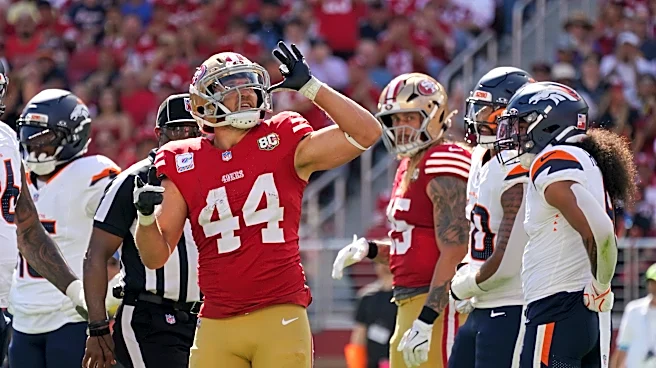
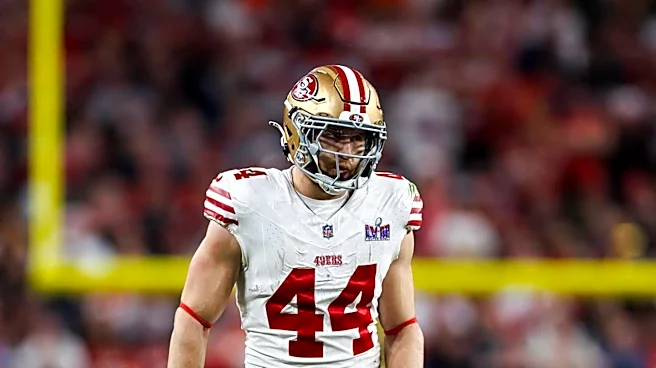
San Francisco 49ers fullback Kyle Juszczyk successfully appealed a fine issued by the NFL for his 'Juice' celebration. The league had initially fined him $29,852 for two infractions of sportsmanship rules after he imitated drinking a beverage during a Week
2 game against the Miami Dolphins. The NFL's initial stance was that the 'imitation of chugging a beer constituted an offensive demonstration and could reasonably be construed as being in poor taste.' However, following Juszczyk's appeal, the NFL, in a joint statement with the NFLPA, clarified its celebration penalties. The new guidance explicitly states that 'recent celebrations imitating drinking a beverage will not be considered violations or result in discipline.' The league also indicated that any conduct falling into a 'gray area' will first receive a warning before any disciplinary action is taken. Juszczyk, whose nickname is 'Juice,' argued that he was imitating drinking juice, not beer, a celebration he has performed for years.
Why It's Important?
This ruling is significant for NFL players and the league's approach to player celebrations. It provides much-needed clarity on what constitutes an acceptable celebration, reducing ambiguity and potentially preventing future fines for similar actions. The NFL's initial crackdown on celebrations, which resulted in 21 fines totaling over $300,000 in the first three weeks of the season, had drawn criticism from players and the NFLPA. This decision, influenced by Juszczyk's appeal and the NFLPA's advocacy, demonstrates a willingness by the league to refine its rules based on player feedback and common practice. It sets a precedent that not all imitative drinking gestures will be penalized, distinguishing them from more explicitly prohibited actions like those depicting violence, drug use, or sexual content. This clarification could foster a more consistent and transparent application of celebration rules across the league.
What's Next?
Following this clarification, NFL players can expect more consistent enforcement of celebration rules, with a clear distinction between permissible and prohibited gestures. The league's commitment to issuing warnings for 'gray area' conduct before imposing fines suggests a more educational approach to rule enforcement. This could lead to fewer fines for celebrations that are not overtly offensive or harmful. The NFLPA's role in advocating for players' rights regarding celebrations is likely to continue, ensuring that future rule interpretations remain fair and transparent. Players like Juszczyk, who have established celebratory traditions, can now continue them without fear of arbitrary penalties. This development may also encourage other players to appeal fines they believe are unjust, knowing that the league is open to re-evaluating its stances on such matters.
Beyond the Headlines
Beyond the immediate impact on player fines, this decision reflects a broader cultural negotiation within professional sports regarding player expression and fan engagement. Celebrations are an integral part of the game's entertainment value, allowing players to connect with fans and express their personalities. The NFL's initial strict stance on celebrations, particularly those that could be misinterpreted, highlighted a tension between maintaining a family-friendly image and allowing players authentic forms of expression. The reversal in Juszczyk's case suggests a recognition by the league that overly rigid rules can detract from the game's appeal and alienate players. This outcome could contribute to a more player-friendly environment, where individuality is celebrated within reasonable boundaries. It also underscores the power of collective bargaining and player advocacy, as the NFLPA's involvement was crucial in achieving this clarification and ensuring a more equitable application of rules.