
What's Happening?
The latest episode of the long-running animated series 'South Park' has satirized President Trump after the Republican party experienced significant losses in the recent midterm elections. The episode,
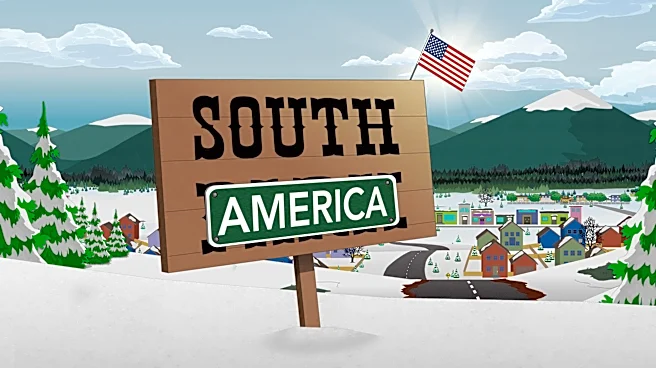
which aired on Wednesday, November 11, did not feature President Trump directly but began with a message from the character Mr. Garrison addressing the election results. Mr. Garrison stated that while they could make jokes about the President, there was 'no fun punching down on a helpless loser,' indicating a shift in the show's approach to satirizing him. Following this, Mr. Garrison announced 'liberal changes' would be implemented across the school, reflecting the political shift. For its 29th season, creators Trey Parker and Matt Stone also renamed 'South Park' to 'South America' in the show, a satirical jab at President Trump's alleged orders to rename major U.S. landmarks to include 'America' in their names, such as Lake Ontario becoming 'Lake America' and New Mexico potentially becoming 'New America.'
Why It's Important?
This development is important as 'South Park' has a long history of political satire and its commentary often reflects or influences public discourse. The show's decision to portray President Trump as a 'helpless loser' and to seemingly move away from direct, aggressive mockery could signal a broader shift in how popular culture engages with his political figure post-election. This change in satirical tone might resonate with a segment of the audience that is experiencing 'Trump fatigue' or a desire for new forms of political commentary. The renaming of 'South Park' to 'South America' within the show also highlights a critical perspective on nationalistic rhetoric and its potential impact on national identity and international relations, even if presented through humor. The show's continued engagement with current events, even with a modified approach, underscores its role as a cultural barometer and a platform for social commentary in the U.S.
What's Next?
The shift in 'South Park's' satirical approach to President Trump could set a precedent for how other comedic and news-satire programs address political figures following significant electoral outcomes. Viewers and critics will likely observe whether this new tone is maintained in future episodes and how it impacts the show's reception and its perceived political stance. The creators, Trey Parker and Matt Stone, have previously indicated an intention to reduce their focus on President Trump but continued due to public pushback. This latest episode suggests a renewed effort to pivot, potentially exploring broader societal themes or other political figures. The ongoing discussion around the midterm election results and President Trump's questioning of their legitimacy will continue to provide fodder for various media outlets, and 'South Park's' take offers one perspective on the cultural processing of these events.
Beyond the Headlines
The episode's commentary on President Trump as a 'helpless loser' and the satirical renaming of landmarks delve into deeper implications regarding the nature of political power, public perception, and national identity. By suggesting that 'punching down' on a defeated figure is no longer entertaining, 'South Park' implicitly critiques the media's and public's prolonged engagement with certain political narratives, potentially encouraging a move towards new forms of political discourse. The 'South America' renaming gag, while humorous, touches on the fragility of national symbols and the potential for political leaders to attempt to redefine them, raising questions about cultural heritage and national branding. This reflects a broader cultural conversation about how societies process political transitions and the role of satire in both reflecting and shaping public sentiment during such periods.