




What's Happening?
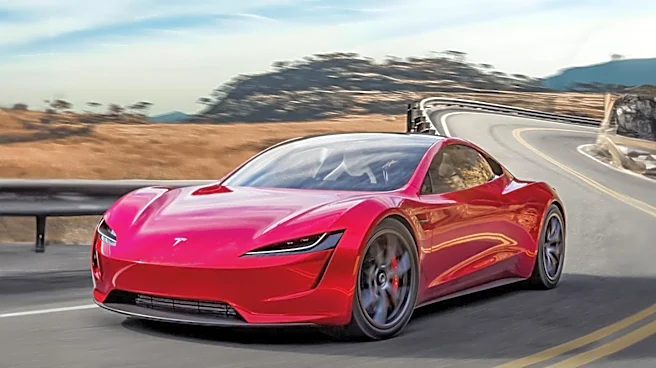
Investor Kevin O'Leary, known from 'Shark Tank,' has publicly stated his belief that a merger between Tesla and Space Exploration Technologies Corp. (SpaceX) is inevitable. His comments followed Tesla's demonstration of its second-generation Roadster
at a SpaceX facility in Texas, where an uncrewed prototype showcased advanced capabilities, including mid-air flips and landing assistance from SpaceX-derived cold-gas thrusters. O'Leary suggested that if such a merger occurs, current shareholders of Tesla would become owners of the new combined entity, and existing SpaceX shareholders would gain ownership in Tesla. He emphasized the increasing technological overlap between the two companies, citing examples such as SpaceX's purchase of Tesla Megapacks, Tesla's ownership of SpaceX shares, and the integration of the artificial intelligence chatbot Grok (developed by xAI, which combined with SpaceX) into Tesla vehicles. Both companies also share interests in AI, computing infrastructure, and advanced engineering, further supporting O'Leary's prediction of a future consolidation.
Why It's Important?
This prediction by a prominent investor like Kevin O'Leary carries significant weight for the U.S. business and technology sectors. A merger between Tesla and SpaceX would create a colossal entity with unparalleled capabilities across electric vehicles, artificial intelligence, space exploration, and energy solutions. Such a consolidation could redefine market dynamics, creating a vertically integrated technology giant that could accelerate innovation in multiple fields simultaneously. For investors, it implies a potential restructuring of their portfolios and a re-evaluation of the long-term growth prospects of both companies. The technological synergies, particularly in AI and advanced engineering, could lead to breakthroughs that might not be possible if the companies remained separate. This potential merger also highlights the growing trend of cross-industry integration, where companies leverage diverse technological expertise to create new market opportunities and competitive advantages.
What's Next?
While O'Leary's comments are speculative, they will likely fuel discussions among investors, analysts, and industry observers about the strategic rationale and potential implications of a Tesla-SpaceX merger. The companies' shared CEO, Elon Musk, has previously discussed collaboration across his ventures, suggesting that such a move aligns with his broader vision. Future developments to watch include any official statements or hints from Tesla or SpaceX leadership regarding potential integration, as well as continued technological collaborations that demonstrate increasing synergy. The market will also be keen to understand the financial and operational structures of such a combined entity, and how it might impact shareholder value, regulatory scrutiny, and competitive landscapes in the automotive, aerospace, and AI industries.
Beyond the Headlines
The idea of a Tesla-SpaceX merger transcends typical corporate consolidation; it represents a bold vision for a future where terrestrial and extraterrestrial technologies are deeply intertwined. This potential union could accelerate humanity's progress in areas like sustainable energy, autonomous transportation, and space colonization, pushing the boundaries of what is currently possible. Ethically, such a powerful and diversified entity could raise questions about market dominance, data privacy, and the concentration of technological influence. Legally, a merger of this scale would face intense scrutiny from antitrust regulators, given the significant market capitalization and technological reach of both companies. Culturally, it could further solidify Elon Musk's role as a singular figure driving multiple technological revolutions, potentially inspiring a new generation of entrepreneurs and engineers to think beyond conventional industry boundaries.