
What's Happening?
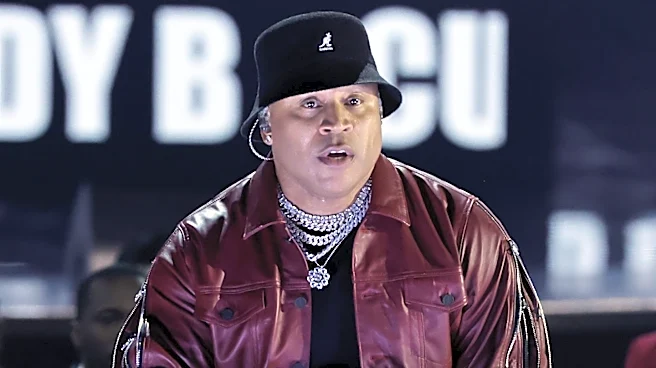
During an interview on "What Now? with Trevor Noah," veteran rapper LL Cool J discussed the Hip Hop community's fixation on age and longevity. He noted that unlike rock artists who can perform well into
their later years without significant scrutiny, Hip Hop artists often face questions about their relevance once they reach their 40s. LL Cool J attributed this phenomenon partly to Hip Hop being a relatively young genre, still experiencing its pioneers aging within the culture for the first time. He argued that much of the obsession over an 'appropriate age' for Hip Hop is rooted in fear—specifically, the fear among artists that they will no longer be able to create impactful music as they get older. He challenged artists to embrace the possibility of continued creativity and impact, reminding them that their fan bases often remain loyal.
Why It's Important?
This discussion highlights a significant cultural and economic challenge within the U.S. music industry, particularly for Hip Hop artists. The perceived age limits can lead to premature career stagnation for talented musicians, limiting their earning potential and creative output. It also impacts how record labels and promoters invest in artists, potentially favoring younger talent over experienced veterans, even if the latter still command a dedicated audience. For fans, this ageism can mean missing out on new music from beloved artists who might otherwise continue to innovate. LL Cool J's perspective, drawing from his four-decade-long career, offers a counter-narrative that could encourage greater longevity and artistic freedom within the genre, potentially shifting industry practices and consumer expectations towards a more inclusive view of age in music.
What's Next?
The conversation initiated by LL Cool J and Trevor Noah could spark further dialogue within the Hip Hop community and the broader music industry regarding ageism. This might lead to increased support for older artists, more diverse marketing strategies, and a re-evaluation of what constitutes 'relevance' in Hip Hop. Artists and industry stakeholders may be encouraged to challenge existing norms, potentially fostering an environment where experience is valued alongside new talent. The continued success of long-standing artists like LL Cool J, who has successfully transitioned into acting and other ventures while maintaining his musical legacy, serves as a powerful example for future generations and could inspire a shift in how longevity is perceived and cultivated in the genre.
Beyond the Headlines
The issue of ageism in Hip Hop extends beyond individual careers, touching upon broader societal perceptions of aging and creativity. In a youth-obsessed culture, the music industry often mirrors and amplifies these biases. LL Cool J's comments implicitly challenge the notion that artistic relevance is solely tied to youth, suggesting that creativity can evolve and thrive at any age. This perspective has ethical implications for how society values its elders and their contributions. Furthermore, it highlights a cultural dimension where genres like rock have historically embraced aging artists, while Hip Hop is still navigating this transition. A shift in this mindset could lead to a richer, more diverse musical landscape, where artists are encouraged to pursue their craft throughout their lives, contributing to a more inclusive cultural narrative.