




What's Happening?
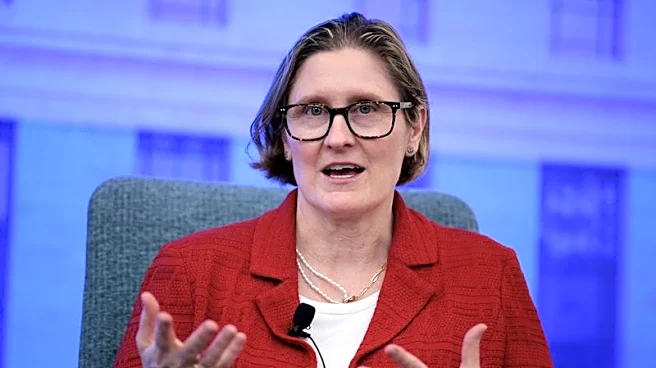
Federal Reserve Chair Kevin Warsh is contemplating a significant change to the central bank's meeting schedule, potentially reducing the number of policy meetings from eight to six annually. This proposal, reported by the New York Times and Bloomberg,
suggests a shift towards fewer rate-setting sessions, supplemented by meetings focused on broader economic issues. The current schedule, in place since the 1980s, requires extensive staff preparation and public communication. The proposed change aims to streamline operations and reduce the procedural burden on the Federal Reserve, aligning with Warsh's restrained communication approach.
Why It's Important?
Reducing the frequency of Federal Reserve meetings could have substantial implications for monetary policy and market dynamics. Fewer scheduled meetings may lead to increased reliance on economic data releases and unscheduled emergency sessions to address unexpected economic shifts. This change could affect how markets anticipate and respond to policy adjustments, potentially increasing volatility. The proposal reflects a broader trend towards more efficient central bank operations, balancing the need for responsiveness with resource management. The decision could influence investor expectations and the Federal Reserve's ability to navigate economic challenges effectively.
What's Next?
A decision on the proposed meeting schedule change could be made before the Federal Reserve's September meeting. If implemented, the new schedule would require adjustments in how the central bank communicates with the public and manages policy decisions. Market participants may need to recalibrate their expectations for policy changes and prepare for potential emergency meetings. The proposal's impact on the Federal Reserve's operational efficiency and policy effectiveness will be closely monitored, as stakeholders assess the trade-offs between reduced procedural burden and flexibility in responding to economic conditions.