






What's Happening?
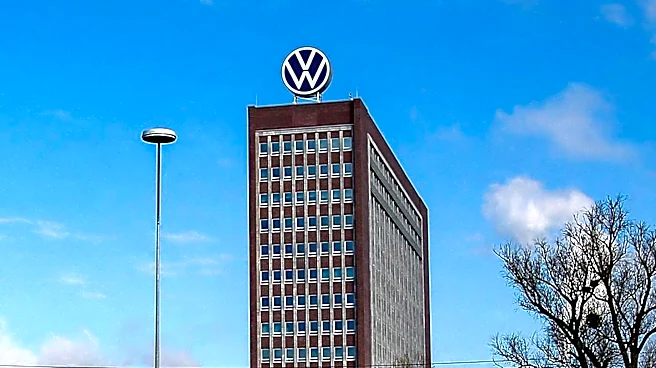
Volkswagen Chief Executive Oliver Blume has publicly dismissed the idea of shutting down German factories, suggesting instead that 'smarter solutions' could be implemented to reduce costs. This statement comes after the company's supervisory board rejected
his broader restructuring plan, which included potential job losses and plant closures. Blume emphasized that Volkswagen has already achieved significant cost reductions at its German sites, approximately 20% on average during 2025, without resorting to closures. However, he did not provide specific details on the alternative measures being considered. Reports indicate that repurposing sites for different production types and forming external partnerships are among the options being explored. The board's decision follows speculation about an internal document outlining a staged closure timeline for several plants, which employ around 40,000 people and produce approximately 750,000 vehicles annually.
Why It's Important?
The situation at Volkswagen highlights the ongoing challenges faced by the automotive industry, particularly in Germany, where labor and state interests often clash with corporate goals. The rejection of Blume's plan underscores the tension between maintaining employment and achieving financial sustainability. Volkswagen's declining sales, especially in China, add pressure to find viable solutions. The company's struggle is indicative of broader structural issues within the German automotive sector, as evidenced by similar declines faced by competitors like Mercedes-Benz and BMW. The outcome of this situation could set a precedent for how traditional automakers navigate the transition to new energy vehicles and adapt to changing market dynamics.
What's Next?
Volkswagen's leadership will need to address the concerns of its workforce and the supervisory board to move forward. Blume is expected to engage directly with staff in upcoming meetings to rebuild trust and outline a clear path forward. The company may continue to explore partnerships or site repurposing as potential solutions. The response from labor unions and state representatives will be crucial in determining the feasibility of these alternatives. Additionally, Volkswagen's performance in key markets like China will likely influence future strategic decisions.