




What's Happening?
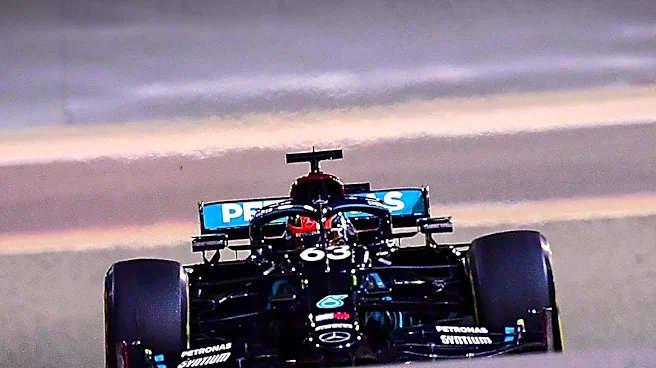
The FIA's decision to penalize Kimi Antonelli for not slowing sufficiently under yellow flags during the Hungarian Grand Prix has reignited debate among F1 drivers about the rules. Antonelli received a three-place grid penalty, while his teammate George
Russell avoided penalty for a similar incident at the Austrian Grand Prix. The inconsistency in penalties has led to discussions about what constitutes 'enough' of a lift under yellow flags. Mercedes' technical staff and former F1 driver Anthony Davidson have highlighted the lack of clarity in the regulations, which leaves room for subjective interpretation by stewards.
Why It's Important?
This incident underscores the ongoing challenges in ensuring fair and consistent enforcement of F1 regulations. The lack of clear guidelines for yellow flag situations can lead to perceived unfairness and affect race outcomes. It also highlights the need for the FIA to refine its rules to prevent ambiguity and ensure that all drivers are held to the same standards. The outcome of this debate could lead to changes in how yellow flag situations are managed, potentially impacting race strategies and driver behavior.
What's Next?
The FIA may consider revising the yellow flag regulations to provide clearer guidelines and reduce subjective interpretation. This could involve implementing a double yellow flag system to eliminate uncertainty. Drivers and teams will likely continue to discuss the issue, seeking a consensus on the best approach. The FIA's response to this situation will be closely watched by the F1 community, as it could set a precedent for future rule enforcement.