








What's Happening?
Researchers from the Federal University of Technology Owerri in Nigeria have reviewed studies suggesting that mixing small amounts of water into diesel fuel can significantly reduce harmful emissions from diesel engines. This method, known as Water-in-Diesel
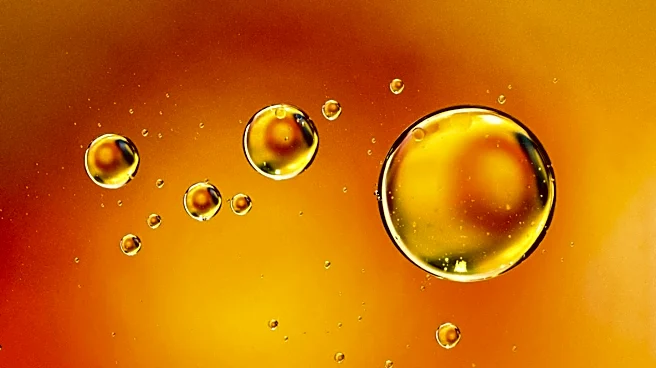
Emulsion (WiDE) technology, involves blending tiny water droplets into diesel fuel using surfactants, which help stabilize the mixture. The research indicates that this approach can reduce nitrogen oxide emissions by up to 67% and particulate matter emissions by up to 68%, while also improving engine efficiency. The technology does not require expensive engine redesigns, making it a practical solution for reducing diesel pollution.
Why It's Important?
Diesel engines are a major source of air pollution, contributing to health issues and environmental problems. The WiDE technology offers a cost-effective way to reduce emissions without the need for complex and costly modifications to existing engines. This could have significant implications for industries reliant on diesel power, such as transportation and agriculture, by providing a cleaner alternative that aligns with global efforts to reduce pollution and combat climate change. The potential for improved engine efficiency also suggests economic benefits, as more energy from the fuel is converted into useful power.
What's Next?
Further research is needed to optimize the surfactant formulations used in WiDE technology and to assess the long-term effects on engine components. The researchers emphasize that WiDE is not intended to replace other clean fuel technologies but could complement them to achieve greater emission reductions. As industries continue to seek sustainable solutions, WiDE technology could play a crucial role in bridging the gap between conventional diesel use and cleaner energy futures.