
What's Happening?
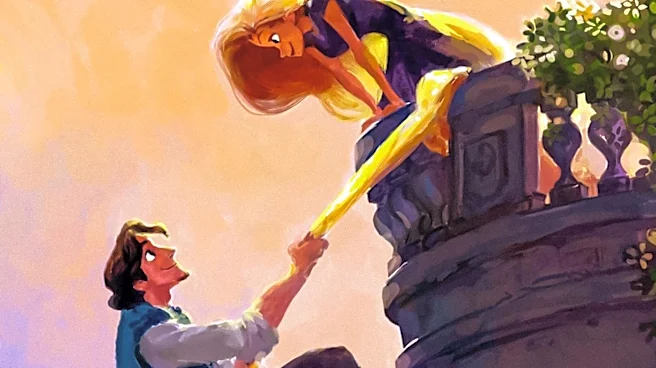
Walt Disney Animation Studios is implementing a new animation pipeline designed to apply diverse art styles to 3D models, moving away from the realistic aesthetic popularized by Pixar. This development aims to give each new Disney movie a unique visual
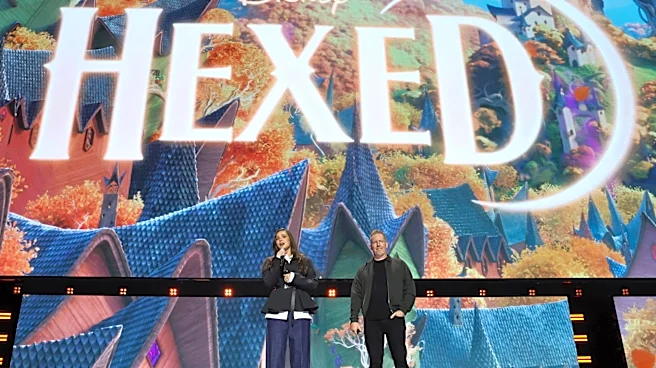
identity. The first theatrical short to showcase this hybrid style is 'Lilo & Scratch,' which blends computer-generated 3D animation with hand-drawn elements, creating a look faithful to the original 2002 'Lilo & Stitch' film. This short will screen before the upcoming movie 'Hexed.' Disney's VFX supervisor Jeremy Sikorski noted that this new pipeline evolved from experiments on previous shorts like 'Paperman' and 'Once Upon a Studio.' The studio is incorporating both new and reused watercolor paintings for backgrounds, some digitally painted and others hand-painted on paper, to achieve this distinctive visual blend. Disney Animation Chief Creative Officer Jared Bush confirmed that all original Disney movies from 'Clay' onwards will adopt this approach, signaling a significant shift in the studio's artistic direction.
Why It's Important?
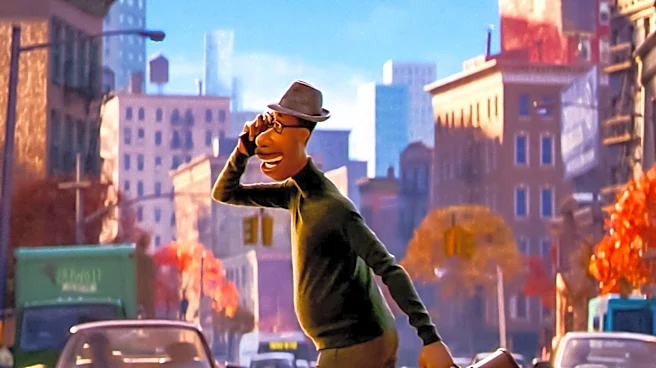
This strategic shift by Disney is significant as it addresses growing audience fatigue with the studio's contemporary 3D animation style and the mixed reception of its live-action remakes. By allowing for a wider range of art styles, Disney aims to appeal to both nostalgic audiences who miss 2D animation and younger viewers seeking fresh visual experiences. This new pipeline could revitalize Disney's creative output, enabling filmmakers to explore more varied artistic expressions without sacrificing the efficiency of 3D-based computer-generated animation. The ability to quickly adjust environments, characters, and props in 3D, combined with the unique aesthetic of hand-drawn elements, offers a powerful blend of artistic freedom and production practicality. This move could set a new industry standard, influencing other animation studios to explore similar hybrid techniques and potentially ushering in a new era of visual diversity in animated films.
What's Next?
The immediate next step for Disney's new animation approach will be the release of 'Lilo & Scratch' alongside 'Hexed,' which will serve as the public's first major exposure to this hybrid style. Following this, all original Disney movies starting with 'Clay' are slated to utilize this pipeline, promising a future where each film boasts a 'wildly different' art style. While sequels like 'Zootopia 3' and 'Frozen 3' are expected to maintain their established looks, 'Hexed' is anticipated to be the last original film in Disney's traditional 3D art style. This indicates a clear transition point for the studio. The industry will likely observe the audience and critical reception of these initial projects closely to gauge the success of this new direction. Competitors may also begin to explore similar hybrid animation techniques, potentially leading to a broader trend of stylistic diversification across the animation landscape.
Beyond the Headlines
This shift represents more than just a technical upgrade; it signifies a potential re-evaluation of artistic identity within a major animation studio. For years, Disney and Pixar's realistic 3D animation style has been dominant, leading to a certain visual homogeneity across many animated features. This new pipeline could foster greater artistic experimentation and allow for narratives to be visually expressed in ways that are more unique and tailored to their specific stories. It also highlights a broader industry trend of blending traditional and modern animation techniques, acknowledging the enduring appeal of hand-drawn aesthetics while leveraging the efficiencies of digital tools. Ethically, it could lead to a richer, more diverse visual landscape in animation, moving away from a 'one-size-fits-all' approach. Culturally, it might reignite appreciation for varied artistic styles in mainstream animation, potentially influencing future generations of animators and filmmakers to push creative boundaries.