






What's Happening?
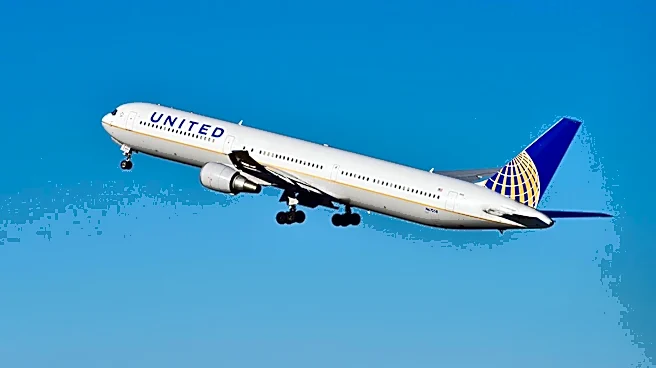
Scott Kirby, CEO of United Airlines, is advocating for government subsidies to support the development and scaling of sustainable aviation fuel (SAF). He draws a parallel to the solar power industry, arguing that initial taxpayer support can help build
the industry, drive down production costs, and eventually eliminate the need for subsidies. Kirby suggests that as cars and trucks electrify, the aviation sector can become a primary customer for corn, soybeans, and existing infrastructure currently supplying road biofuels. He has previously made similar arguments, including on 'Face the Nation' in September 2021, and has been involved in discussions surrounding Biden-era initiatives, including the Inflation Reduction Act. United Airlines itself has a vested interest in this area, holding a 33% ownership in the United Airlines Ventures Sustainable Flight Fund, which invests in aviation decarbonization technologies, including SAF.
Why It's Important?
The push for government subsidies for sustainable aviation fuel by a major airline CEO like Scott Kirby highlights a significant intersection of environmental policy, economic development, and the future of the aviation industry. If successful, such subsidies could accelerate the production and adoption of SAF, potentially reducing the carbon footprint of air travel and helping the U.S. meet climate goals. However, it also raises questions about taxpayer burden and the effectiveness of such interventions. Critics point out that SAF currently constitutes a minimal portion of the market, with the International Air Transport Association projecting it to supply only 0.8% of global aviation fuel consumption by 2026. There are also concerns about the environmental trade-offs of expanding crop-based biofuels, including potential land use problems and the possibility of shifting fossil fuel production elsewhere. The financial implications for airlines and passengers are also significant; without viable alternatives, airlines might pass on costs or delay emissions reductions, potentially leading to higher ticket prices.
What's Next?
The ongoing advocacy by United Airlines CEO Scott Kirby suggests continued efforts to lobby for federal support for sustainable aviation fuel. This will likely involve further engagement with policymakers in Washington, D.C., across both political parties, as Kirby has previously sought to appeal to both climate concerns on the left and agricultural markets on the right. The debate will continue regarding the most effective strategies to decarbonize the aviation sector, with discussions focusing on the balance between government incentives, technological innovation, and market forces. The effectiveness of subsidies in driving down SAF production costs and increasing its market share will be closely monitored. Additionally, the environmental impact of increased biofuel production, particularly concerning land use and overall carbon emissions, will remain a critical point of contention and research. Future policy decisions will likely hinge on these economic and environmental considerations, potentially shaping the long-term trajectory of the U.S. aviation industry's sustainability efforts.
Beyond the Headlines
Beyond the immediate economic and environmental considerations, the debate over sustainable aviation fuel subsidies touches upon deeper ethical and strategic questions regarding corporate responsibility and the role of government in fostering new industries. While airlines like United are investing in SAF technologies, their call for taxpayer funding raises questions about the extent to which the public should bear the financial risk for industry-wide transitions. This situation also highlights the complex political maneuvering involved in environmental policy, where companies seek to align their interests with broader societal goals while potentially benefiting from public funds. The long-term success of SAF as a primary solution for aviation emissions will depend not only on cost reduction but also on overcoming challenges related to feedstock availability, production scalability, and the overall life-cycle environmental impact. This ongoing discussion could set precedents for how other carbon-intensive industries approach their decarbonization efforts, influencing future public-private partnerships and regulatory frameworks.