







What's Happening?
Architect Frank Gehry, known for his deconstructivist and sculptural designs, has made a significant impact on the Manhattan skyline with a limited but distinctive portfolio of buildings. Despite a long period where he struggled to secure major commissions
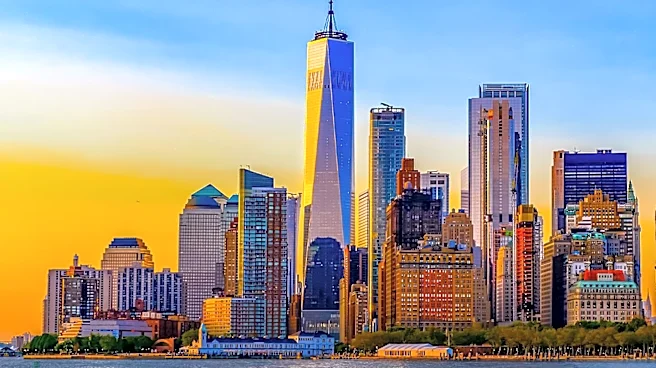
in New York City, Gehry eventually completed three notable projects. His first project in the city was the Condé Nast Cafeteria in Times Square, completed in 2000. This was followed by the IAC Building in Chelsea, finished in 2007, which is characterized by its sail-like shape and glass exterior. His most prominent contribution is 8 Spruce Street, a skyscraper completed in 2011 in Lower Manhattan, which features a rippling stainless-steel façade and was, for a time, the tallest residential building in the Western Hemisphere. These buildings stand out for their unique aesthetic and have become critical elements of New York's contemporary architectural landscape.
Why It's Important?
Gehry's architectural contributions are important because they challenge traditional urban aesthetics and introduce a dynamic, sculptural quality to the Manhattan skyline. His buildings, particularly 8 Spruce Street and the IAC Building, serve as landmarks that redefine modern architectural possibilities in a city known for its iconic structures. The scarcity of his work in New York makes each project particularly significant, highlighting how a few distinctive designs can profoundly influence a city's visual identity and architectural discourse. These structures not only provide functional spaces but also act as public art, sparking conversations about design, urban development, and the role of architecture in shaping cultural perceptions of a city. His work demonstrates that even in a densely built environment, innovative design can create unique and memorable urban experiences.
What's Next?
While the source does not indicate any immediate new projects for Frank Gehry in New York, the existing buildings will continue to be subjects of architectural study and public appreciation. Their long-term impact will be observed in how they integrate into the evolving urban fabric of Manhattan and how future developments respond to or contrast with their distinctive styles. The maintenance and preservation of these unique structures will also be an ongoing consideration, ensuring their continued contribution to the city's architectural heritage. Future architects and urban planners will likely draw inspiration from or react against Gehry's deconstructivist approach, influencing the direction of new construction in New York and beyond. The legacy of these buildings will continue to shape discussions on modern architecture and urban design.
Beyond the Headlines
Gehry's journey to establish a foothold in New York City, as detailed in the source, reveals the challenges even world-renowned architects face in highly competitive urban environments. His initial struggles and eventual breakthroughs underscore the complex interplay of artistic vision, client relationships, and urban planning regulations. The unique aesthetic of his buildings, characterized by their fluid forms and unconventional materials, also raises broader questions about the balance between architectural innovation and contextual harmony in historic cities. These structures push the boundaries of what is considered conventional, prompting a re-evaluation of how modern design can coexist with and enhance existing urban landscapes. The impact of Gehry's work extends beyond mere construction, influencing cultural perceptions of architecture as an art form and its capacity to transform public spaces.