






What's Happening?
England's national museums will continue to offer free admission to all visitors, including those from overseas. This decision comes after months of discussions among government officials, museum representatives, the tourism sector, and local leaders
regarding the potential benefits of charging international tourists. Ministers had previously considered that charging overseas visitors could provide significant financial benefits to these institutions. However, the Department for Culture, Media and Sport (DCMS) confirmed that universal free admission would remain in place. The government concluded that charging overseas visitors could deter domestic visitors and that the impacts and benefits of such a policy would not be evenly distributed across the sector. Universal free admission to museums was initially introduced by the Labour government in 2001.
Why It's Important?
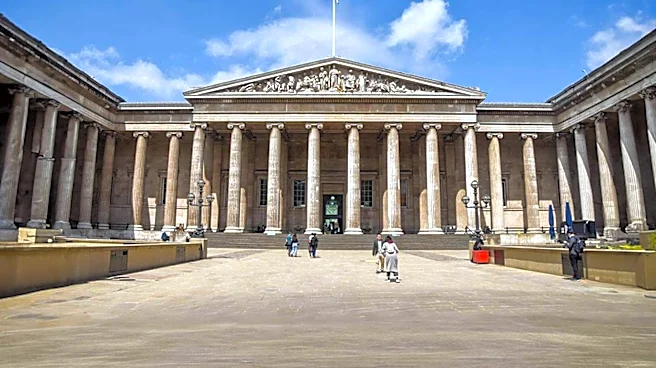
This decision has significant cultural and economic implications. England's national museums are major contributors to the economy, generating over £1 billion annually and attracting millions of visitors worldwide, with institutions like the Natural History Museum and the British Museum drawing 7.1 million and 6.4 million visitors in 2025, respectively. Maintaining free entry ensures continued accessibility to culture and heritage for a broad audience, aligning with the belief that access to culture is a right, not a privilege. The government's commitment to free admission is supported by substantial funding, including £760 million through the £1.5 billion Arts Everywhere Fund and £600 million in infrastructure funding for national museums. This approach aims to sustain the cultural vibrancy and global appeal of these institutions, which are considered a key part of London's identity as a cultural capital. The decision also reflects a strategic choice to prioritize broad public access over potential, but uncertain, revenue gains from international visitors.
What's Next?
The DCMS plans to work with Arts Council England and the museum sector to develop a long-term strategic plan for museums, with further details to be announced. This initiative, alongside the £13.6 million museum transformation program, aims to help organizations move towards more sustainable business models without resorting to charging international visitors. The continued government funding and strategic planning indicate an ongoing commitment to supporting these cultural institutions. The focus will likely be on optimizing existing funding, exploring innovative operational models, and enhancing visitor experiences to ensure the museums remain vibrant and accessible. The decision also sets a precedent for cultural policy, emphasizing the value of universal access to national heritage. Future discussions may revolve around how to further diversify funding streams and ensure the long-term financial health of these institutions while upholding the principle of free entry.
Beyond the Headlines
The debate over charging international visitors to national museums touches upon deeper philosophical questions about the role of cultural institutions in society and the balance between public access and financial sustainability. The decision to maintain free entry underscores a commitment to cultural democratization, ensuring that economic status does not bar individuals from experiencing national heritage. This contrasts with models in some other countries that charge international visitors while offering free entry to citizens. The economic argument against charging, citing potential deterrence of domestic visitors and uneven benefits, highlights the complex interplay between tourism, local engagement, and institutional funding. This policy choice reflects a broader societal value placed on cultural enrichment and education for all, rather than viewing museums primarily as revenue-generating entities. It also implicitly acknowledges the indirect economic benefits of free museums, such as their contribution to the overall tourism ecosystem and the city's cultural brand, which may outweigh direct revenue from ticket sales.