



What's Happening?
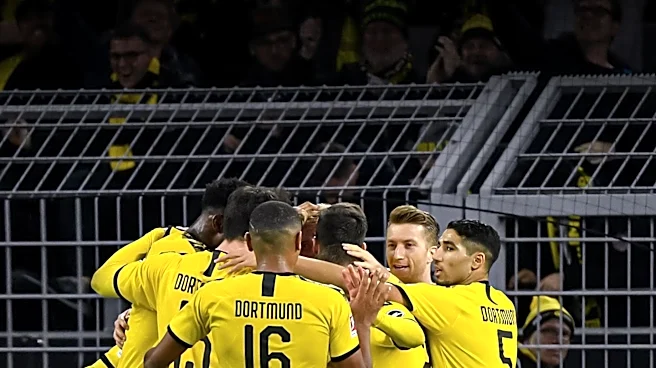
Borussia Dortmund, a prominent German football club, will conclude its sponsorship agreement with the German defense manufacturer Rheinmetall by June 30, 2027. This decision means the club will forgo approximately €10 million in annual revenue. The partnership,
which began in 2024, has been a source of controversy among the club's members, with 65% voting against the sponsor in a non-binding motion. Members expressed concerns that the partnership did not align with the club's fundamental values, arguing that Rheinmetall profits from war. Despite the financial implications, Borussia Dortmund's management, including Chairman Carsten Cramer, has decided to honor the wishes of its members. Both parties, however, have indicated that they intend to continue collaborating on social welfare initiatives, particularly those supporting children and young people in war-torn Ukraine.
Why It's Important?
This decision highlights a growing tension between financial gain and ethical considerations within sports sponsorships. Borussia Dortmund's choice to prioritize member sentiment over a significant revenue stream sets a precedent for other sports organizations facing similar ethical dilemmas. The loss of €10 million annually will necessitate a re-evaluation of the club's financial strategies, potentially leading to stricter austerity measures, adjustments in salary structures, or increased efforts to secure new sponsors. This move could influence how other clubs and organizations assess partnerships with companies involved in controversial industries, potentially shifting the landscape of sports sponsorships towards greater ethical scrutiny and stakeholder alignment. The club's commitment to social welfare initiatives with Rheinmetall, despite ending the sponsorship, also demonstrates an attempt to balance financial and ethical concerns with ongoing humanitarian efforts.
What's Next?
Following the termination of the Rheinmetall sponsorship in June 2027, Borussia Dortmund will face the immediate challenge of compensating for the €10 million annual revenue loss. The club's management will likely scrutinize planned expenditures more carefully, re-evaluate investment priorities, and intensify efforts to explore additional revenue streams and secure new sponsors. Carsten Cramer has indicated that he will openly discuss these financial implications at the upcoming general meeting, where members will likely celebrate the decision while also anticipating the club's strategy to mitigate the financial impact. Both Borussia Dortmund and Rheinmetall plan to continue their joint social welfare initiatives, particularly those focused on aiding Ukrainian children, suggesting a continued, albeit non-commercial, relationship in specific areas.
Beyond the Headlines
The decision by Borussia Dortmund to end its sponsorship with Rheinmetall delves into deeper implications regarding corporate social responsibility and stakeholder capitalism within the sports industry. It underscores the increasing power of fan bases and member organizations to influence major commercial decisions, even when significant financial interests are at stake. This case could serve as a benchmark for how sports entities navigate partnerships with industries perceived as ethically problematic, potentially leading to a broader re-evaluation of sponsorship ethics across professional sports. The club's emphasis on this being an 'absolute exception' also highlights the delicate balance between upholding values and maintaining economic viability, suggesting that while member wishes are important, financial realities remain a critical factor in future decisions. This event could spark further debate on the role of defense companies in public-facing sponsorships and the ethical responsibilities of sports organizations.