








What's Happening?
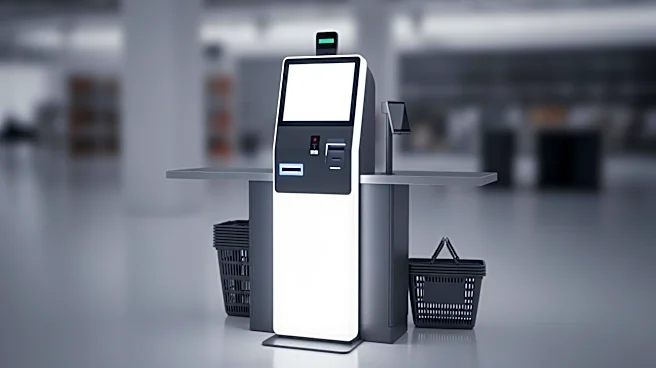
A study by ECR Retail Loss has found that 54% of retail transactions are now completed through self-service checkouts. The research, led by Professor Matt Hopkins, analyzed data from 39 retailers and highlighted the growth of self-checkouts alongside
challenges such as increased store losses. While self-checkouts have led to a 22% rise in shrinkage, these losses have stabilized since 2018. The study identifies both customer errors and intentional theft as sources of loss, with interventions like prompts and exit gates suggested to mitigate these issues.
Why It's Important?
The rise of self-checkouts reflects a significant shift in consumer behavior and retail operations, emphasizing convenience and efficiency. However, the associated increase in losses presents a challenge for retailers, necessitating effective loss prevention strategies. This development is crucial for the retail industry as it balances the benefits of self-service technology with the need to protect revenue. The findings could influence future retail strategies, encouraging the adoption of more sophisticated systems to enhance accuracy and reduce losses, ultimately impacting profitability and customer satisfaction.
What's Next?
Retailers may continue to refine self-checkout systems to minimize losses while maintaining customer convenience. This could involve the integration of advanced technologies such as AI and machine learning to better detect and prevent theft. As retailers adapt, there may be increased collaboration with technology providers to develop innovative solutions tailored to specific operational needs. The industry might also see a shift towards more personalized customer interactions to enhance the shopping experience and reduce errors at self-checkouts.