







What's Happening?
The United States holds the dominant share in the North American liquid feed supplement market, which is a significant segment of the broader Europe Liquid Feed Supplement market. This dominance is primarily driven by the presence of large-scale cattle
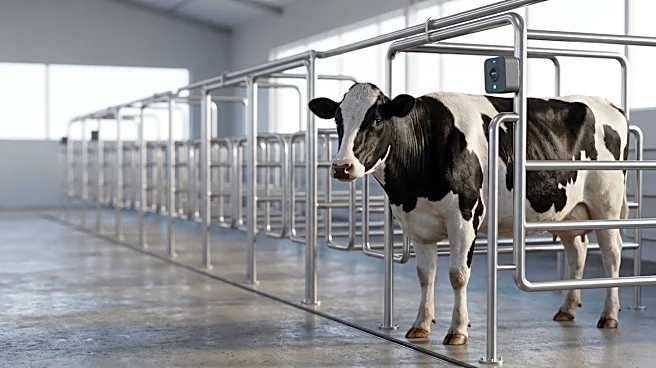
feedlots and a robust dairy industry that requires consistent nutrient delivery for ruminant animals. Liquid feed supplements, typically delivered in a fluid, molasses-based carrier enriched with proteins, vitamins, minerals, and non-protein nitrogen, are designed to enhance feed efficiency, digestibility, and overall herd performance in dairy and beef cattle. The growth in the U.S. market is propelled by the adoption of precision feeding technologies and a shift towards molasses-based products due to their improved palatability. Canada also has a stable but smaller market, focusing on beef cattle in the Prairies and showing increasing interest in organic and non-GMO liquid supplements.
Why It's Important?
The strong position of the U.S. in the liquid feed supplement market highlights the country's advanced agricultural practices and its commitment to optimizing livestock health and productivity. The reliance on precision feeding technologies indicates a move towards more efficient and data-driven farming, which can lead to reduced waste and improved animal welfare. The demand for consistent nutrient delivery in large-scale cattle and dairy operations underscores the economic importance of these sectors to the U.S. agricultural economy. Furthermore, the growing interest in organic and non-GMO liquid supplements in North America reflects evolving consumer preferences and regulatory pressures towards more sustainable and natural farming methods. The market's expansion into the southwestern U.S., where water scarcity is a concern, demonstrates the adaptability of liquid feeds as an efficient hydration and nutrition solution, addressing critical environmental challenges faced by the industry.
What's Next?
The liquid feed supplement market in North America is expected to continue its growth, driven by ongoing advancements in precision nutrition and the increasing demand for high-quality dairy and meat products. Opportunities are particularly strong in expanding into the southwestern U.S., where liquid feeds can offer efficient hydration and nutrition solutions in water-scarce regions. The market will likely see further innovation in product formulations, including low-emission supplements to mitigate methane output and the integration of organic and plant-based ingredients to meet sustainability mandates. The adoption of digital monitoring tools for real-time adjustment of liquid supplement dosages is also anticipated to increase. While established distribution networks are a benefit, the market faces competition from dry feed alternatives, necessitating continuous innovation and demonstration of the benefits of liquid supplements to maintain market share and drive future growth.
Beyond the Headlines
The prominence of liquid feed supplements in the U.S. livestock industry reflects a broader trend towards industrialization and optimization in agriculture. The use of these specialized products goes beyond basic nutrition, aiming to enhance specific performance metrics like feed conversion ratios and carcass quality, which are crucial for profitability in large-scale operations. The shift towards molasses-based products for palatability also points to a sophisticated understanding of animal behavior and dietary preferences. The market's growth in the context of water scarcity in the southwestern U.S. highlights how agricultural technology can adapt to environmental challenges, potentially influencing water management strategies in other sectors. Moreover, the increasing demand for organic and non-GMO options signals a consumer-driven push for transparency and sustainability in the food supply chain, which could lead to more widespread adoption of such practices across the U.S. agricultural landscape.