






What's Happening?
Sarah Minnick, a Portland resident and restaurateur, has cultivated an intergenerational living arrangement in her North Portland home. Minnick initially purchased her house in 2001 with her sister, Jane. While Jane later moved to a larger house nearby,
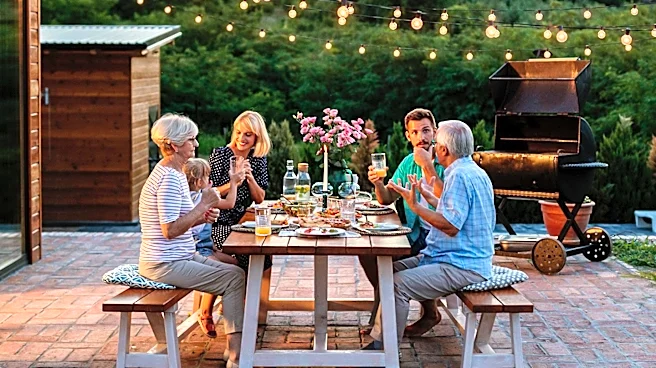
Minnick's mother, Ann Reed, now occupies a house adjacent to Minnick's property, which was previously owned by Jane. This setup allows for close family proximity, with Minnick's children, Sophie (21) and Otto (15), still residing at home. The family's history includes shared gardens and a collaborative approach to both living and business, as Minnick and Jane co-founded Lovely Hula Hands, which evolved into Lovely's Fifty Fifty. Minnick's home features a colorful, somewhat sparsely decorated interior with handmade ceramics and a significant plant collection, while her mother's home showcases a maximalist style, including an extensive Lego collection. The arrangement highlights a natural evolution of family living that predates the popularization of the 'intergenerational living' concept.
Why It's Important?
This story illustrates a growing trend in U.S. society towards intergenerational living, driven by various factors including rising housing costs, a desire for stronger family bonds, and the practical benefits of shared resources and support. For families like Minnick's, this arrangement provides a built-in support system for childcare, elder care, and even business collaboration, as Ann Reed still handles the bookkeeping for Lovely's Fifty Fifty. The economic implications are significant, as intergenerational households can alleviate financial burdens for both younger and older generations, potentially reducing the need for external care services or expensive housing. Socially, it fosters a sense of community and shared responsibility, counteracting the isolation often experienced in more fragmented family structures. This model could influence urban planning and housing development, encouraging designs that accommodate multi-generational households and promote community interaction, offering a sustainable and supportive living solution for many Americans.
What's Next?
Minnick plans to remodel and eventually live in a detached garage on her mother's property, further solidifying their intergenerational living arrangement. This move suggests a continued commitment to close family proximity and shared living spaces. The success of their family-run restaurant, Lovely's Fifty Fifty, which benefits from the collaborative efforts of Minnick and her mother, indicates a sustainable business model rooted in family support. As the concept of intergenerational living gains more recognition, there may be increased interest in similar housing solutions and community designs across the U.S. This could lead to more flexible zoning laws, innovative architectural designs, and a greater societal acceptance of multi-generational households as a viable and beneficial living option. The family's experience may also inspire other families to explore similar arrangements, potentially influencing broader lifestyle choices and community development.
Beyond the Headlines
The Minnick family's story delves into the deeper cultural and ethical dimensions of family and community. Their organic adoption of intergenerational living, prior to its popularization, highlights an innate human desire for connection and mutual support. This arrangement challenges the conventional American ideal of independent nuclear families, suggesting a return to more communal living structures that were historically common. Ethically, it raises questions about the value placed on family ties and the responsibilities individuals have towards their relatives, particularly in an aging society. The integration of work and family life, as seen in the restaurant business, blurs traditional boundaries and emphasizes a holistic approach to living. This model could foster greater empathy and understanding between generations, as daily interactions provide opportunities for shared experiences and learning. It also subtly critiques consumer culture, with Minnick's minimalist decorating style contrasting with her mother's maximalist collection, reflecting different generational values and approaches to material possessions.