






What's Happening?
CIM Group's Permanent Power Company has secured approximately $600 million in construction financing for the Grape Solar project, located in Westlands Solar Park, California. This financing includes a $372.3 million construction-to-term loan, a $166.7
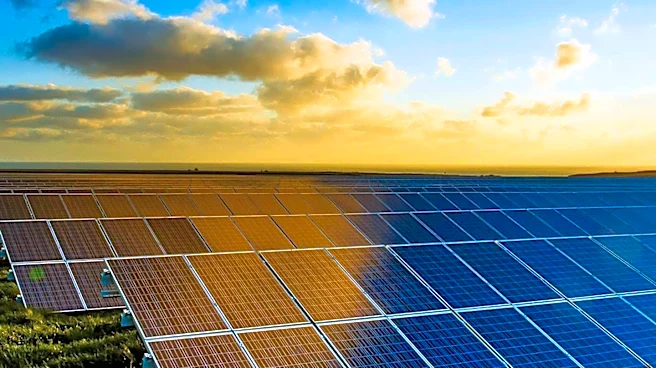
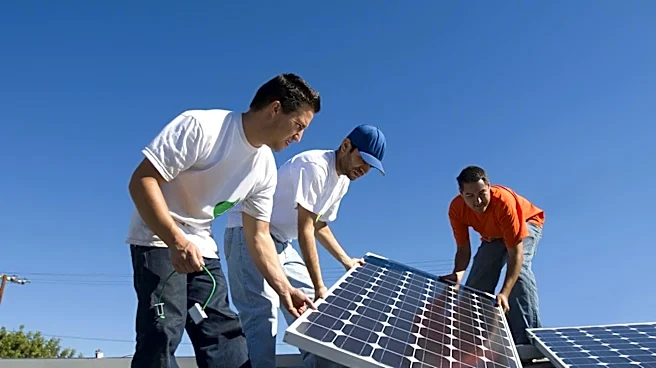
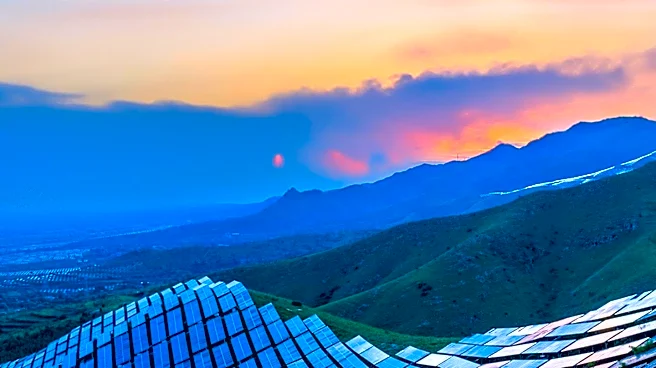
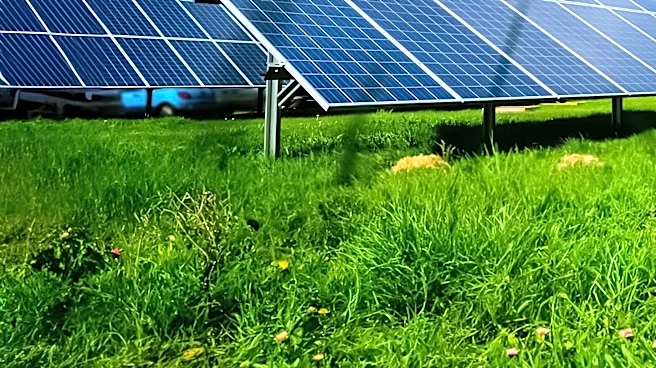
million tax credit transfer bridge loan, and a $61.3 million letter of credit facility. The Grape Solar project is a 246.4 MWac solar photovoltaic initiative with 150 MWac, or 600 MWh, of battery energy storage systems. Situated in one of the largest solar parks in the U.S., the project is expected to generate enough clean energy to power over 86,000 homes annually. Construction has commenced, creating over 400 jobs, and the project is part of a broader effort to utilize land unsuitable for farming due to high salt content.
Why It's Important?
The Grape Solar project represents a significant step in California's renewable energy expansion, contributing to the state's goals for sustainable energy and climate change mitigation. By harnessing solar power and integrating battery storage, the project enhances grid reliability and supports the transition away from fossil fuels. The substantial investment underscores confidence in renewable energy's economic viability and potential for job creation. This development aligns with broader trends in the energy sector, where solar and wind projects are increasingly favored for their environmental benefits and cost-effectiveness.
What's Next?
As construction progresses, the Grape Solar project will likely attract attention from policymakers and environmental advocates as a model for future renewable energy projects. The successful implementation could encourage further investments in similar projects across the U.S., particularly in regions with abundant sunlight and underutilized land. Additionally, the project's completion will be closely monitored to assess its impact on local energy markets and its contribution to California's renewable energy targets.
Beyond the Headlines
The Grape Solar project highlights the potential for renewable energy projects to revitalize economically challenged areas by creating jobs and utilizing otherwise unproductive land. It also raises questions about the balance between renewable energy development and land use, particularly in regions with agricultural constraints. The project's success could influence future land management policies and encourage innovative solutions to land use challenges.