
What's Happening?
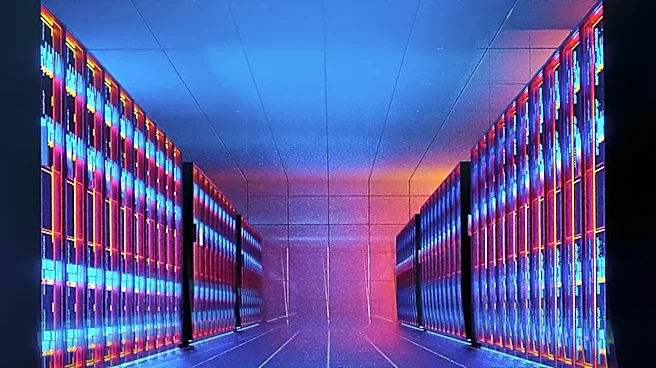
Data centers, which consumed 1.5% of global electricity in 2024, are increasingly concentrated in clusters driven by artificial intelligence (AI) demands. According to the International Energy Agency (IEA),
this clustering could lead to grid delays for one in five planned projects. The issue is not the electricity supply itself but the infrastructure required to deliver it to these new server clusters. The United States, which accounts for 45% of data-center electricity use, is seeing nearly half of its data centers being developed in existing large clusters. The IEA projects that global data-center electricity consumption could reach 945 terawatt-hours by 2030, driven largely by AI and other digital services. This growth poses challenges for grid operators who must manage the increased demand and ensure reliable power delivery.
Why It's Important?
The concentration of data centers in specific regions poses significant challenges for power grid infrastructure, which was not designed to handle such localized demand spikes. This could lead to delays in project completions and increased costs for data center operators. The U.S., being a major player in data-center electricity consumption, faces potential economic impacts if these infrastructure issues are not addressed. The need for new substations, upgraded transformers, and additional generation capacity could strain resources and delay technological advancements. Moreover, the reliance on AI and digital services means that any disruptions in power supply could have widespread effects on industries that depend on these technologies.
What's Next?
To mitigate potential grid delays, stakeholders may need to invest in infrastructure upgrades and explore alternative solutions such as onsite batteries and backup generation. Grid operators and data center developers will need to collaborate to ensure that new projects are sited in areas with adequate transmission and generation capacity. Additionally, there may be a push for regulatory changes to streamline the permitting process for new infrastructure projects. As AI continues to drive demand, the industry will need to balance growth with sustainable energy practices to avoid exacerbating existing grid constraints.