



What's Happening?
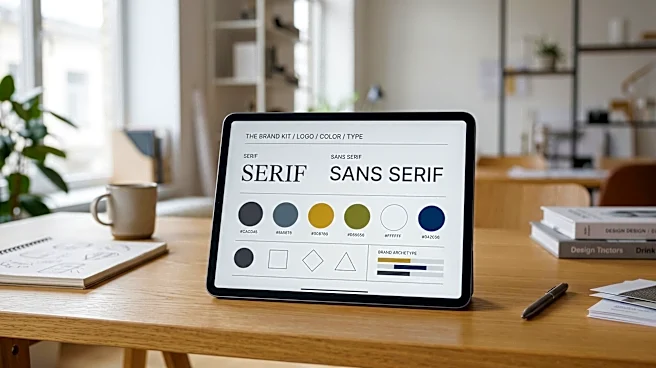
Luma AI, a software development company based in the San Francisco Bay Area, has launched two new features: Brand Kit and Character Library. These tools are designed to address a common challenge in AI-generated content, where generative AI often improvises
on brand-specific details like logos, typefaces, product silhouettes, and character appearances. The Brand Kit allows users to upload logos, fonts, and products, ensuring that all subsequent AI generations adhere to these established brand guidelines. If formal guidelines are not available, users can provide a website URL, and Luma AI's agent will draft a Brand Kit for review. Similarly, the Character Library serves as a digital repository for characters, avatars, and models, maintaining consistency in facial features, body, wardrobe, and expressions. These features are integrated into Luma's agentic creation system, which can evaluate alignment with set brand and character rules, aiming to streamline the creation of consistent, on-brand campaigns.
Why It's Important?
The introduction of Brand Kit and Character Library by Luma AI is significant for businesses and creators relying on AI for content generation. It tackles a critical pain point: the lack of consistency and brand fidelity in AI-produced visuals. For companies, maintaining a consistent brand image across all marketing materials is paramount for brand recognition and trust. Generative AI's tendency to deviate from established brand elements has been a barrier to its full adoption in professional marketing and advertising. By providing tools that enforce brand guidelines and character consistency, Luma AI enables businesses to leverage AI's efficiency without compromising brand integrity. This could lead to faster content creation cycles, reduced need for manual corrections, and more effective campaigns, ultimately impacting marketing budgets and creative workflows across various industries.
What's Next?
Luma AI's new features are available to all users, from individual creators to global brands, indicating a broad push for their adoption. The company anticipates that these tools will unlock new workflows, allowing teams to focus more on campaign strategy rather than correcting AI-generated content for brand alignment. The integration of these features into Luma's agentic creation system suggests a future where AI plays a more autonomous role in content production, with built-in mechanisms for quality control and brand adherence. As more businesses adopt these tools, there could be a shift in how marketing and creative departments operate, potentially leading to increased efficiency and a higher volume of on-brand content. Luma AI has also updated its white paper, 'Brand Universe: Taught Once,' to detail these findings, further promoting the understanding and utilization of these new capabilities.
Beyond the Headlines
The launch of Brand Kit and Character Library by Luma AI highlights a broader trend in the evolution of artificial intelligence: the move from raw generation to intelligent, context-aware creation. This development addresses not just technical limitations but also the ethical and practical concerns surrounding AI's role in creative industries. By enabling AI to 'understand' and adhere to specific brand identities, Luma AI is pushing the boundaries of what generative AI can achieve in a professional context. This could lead to a redefinition of creative roles, with human creators focusing more on strategic direction and less on repetitive, corrective tasks. Furthermore, it underscores the growing importance of 'guardrails' in AI development, ensuring that powerful AI tools serve human objectives and maintain desired standards, particularly in areas like brand representation and intellectual property.