

What's Happening?
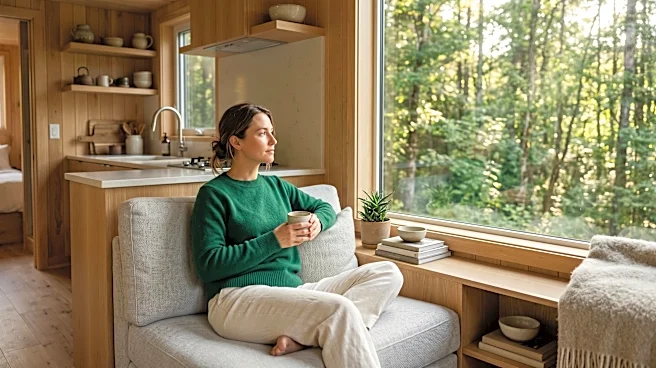
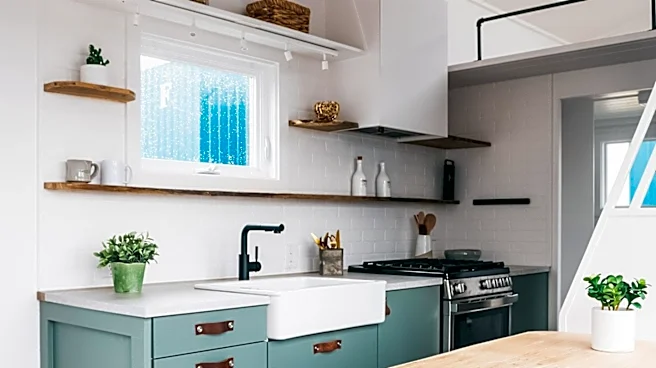
The Jean-Baptiste tiny house, designed by French builder Tibi House, exemplifies the integration of multifunctional furniture to maximize utility within a compact 185-square-foot layout. This tiny home features hybrid convertible furniture with built-in
storage, allowing for efficient use of limited floor space. A key highlight is the convertible dining area, which includes a folding wooden table and U-shaped bench seating. This setup can transform from a dining space into a lounge with ample legroom, and the table's height is adjustable for use as a work desk. The wooden benches also incorporate hidden storage, concealing bulky items and contributing to an uncluttered interior.
Why It's Important?
The design of the Jean-Baptiste tiny house is significant as it showcases advanced solutions for compact living, a growing trend in the U.S. and globally. The innovative use of multifunctional furniture directly addresses the challenges of limited space, offering practical and aesthetically pleasing ways to maintain full residential functionality in tiny homes. This approach impacts the housing market by demonstrating viable alternatives to traditional, larger homes, potentially influencing future architectural and interior design trends for small-scale dwellings. For consumers, it highlights how thoughtful design can enhance quality of life in compact environments, providing inspiration for optimizing their own living spaces. The emphasis on built-in storage and convertible elements also promotes a more minimalist and organized lifestyle.
What's Next?
The success of designs like the Jean-Baptiste tiny house is likely to inspire further innovation in the tiny home movement and broader residential design. Expect to see more builders and designers incorporating highly integrated, multifunctional furniture and built-in storage solutions into compact living spaces. This could lead to the development of new materials and technologies that enable even more seamless transformations and space-saving features. The market for specialized furniture for tiny homes and small apartments is also likely to expand, offering consumers a wider range of customizable and adaptable options. This trend may also influence urban planning and zoning regulations, as demand for smaller, more efficient housing options continues to grow.
Beyond the Headlines
The Jean-Baptiste tiny house represents more than just efficient design; it embodies a philosophical shift towards sustainable and intentional living. By demonstrating that a comfortable and functional life is possible within a minimal footprint, it challenges conventional notions of what constitutes a 'home.' This approach has ethical implications, promoting reduced consumption and a smaller environmental impact. Culturally, it fosters a greater appreciation for craftsmanship and clever engineering, as every element must serve a purpose and be meticulously integrated. The psychological benefit of living in an uncluttered, well-organized space, even a small one, can also contribute to a sense of calm and well-being, reflecting a desire for simplicity in an increasingly complex world.