

What's Happening?
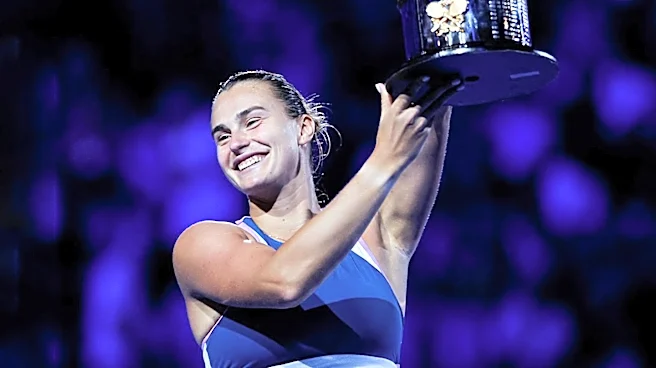
The draw for the WTA Finals in Indian Wells has placed Aryna Sabalenka and Coco Gauff in separate groups, ensuring they will not meet until at least the semi-finals, and potentially setting up a final clash. World No. 4 Coco Gauff is in Group A alongside
World No. 1 Elena Rybakina, World No. 5 Jessica Pegula, and Linda Noskova. World No. 2 Aryna Sabalenka headlines Group B, which includes Mirra Andreeva, Elina Svitolina, and Karolina Muchova. This strategic seeding aims to maximize the chances of a highly anticipated final between Sabalenka and Gauff, given their close head-to-head record and recent rivalry, including Gauff's victory over Sabalenka at the 2023 US Open.
Why It's Important?
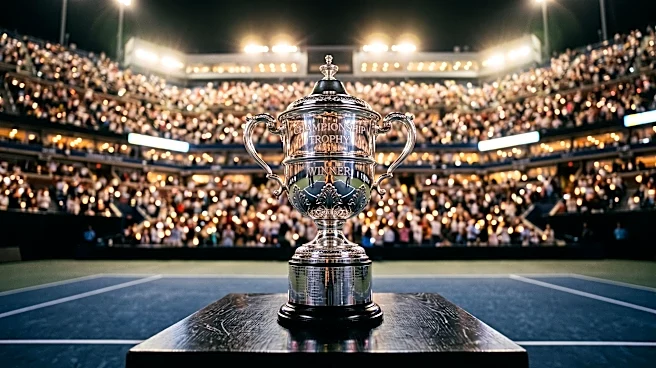
The WTA Finals draw is significant for the sport of tennis, particularly for fans and the competitive landscape. By separating two of the sport's biggest stars, Aryna Sabalenka and Coco Gauff, the tournament organizers aim to build anticipation for a potential championship match. This strategy enhances viewership and media interest, as a final between these two players would be a culmination of their ongoing rivalry and contrasting playing styles. For the players, navigating their respective challenging groups is crucial. Gauff faces a tough Group A with strong opponents, while Sabalenka's Group B also presents diverse challenges. The outcome of this tournament will significantly impact year-end rankings and establish momentum for the upcoming season, determining who holds the psychological edge in their rivalry.
What's Next?
The WTA Finals are set to commence in Indian Wells, with both Coco Gauff and Aryna Sabalenka preparing to compete in their respective groups. Gauff will face Elena Rybakina, Jessica Pegula, and Linda Noskova in Group A, while Sabalenka will compete against Mirra Andreeva, Elina Svitolina, and Karolina Muchova in Group B. The top two players from each group will advance to the single-elimination semi-finals. If both Gauff and Sabalenka win their respective groups, they are positioned to meet in the final. If one finishes as a group winner and the other as a runner-up, they could face each other in the semi-finals. The tournament will unfold with intense matches as players vie for the year-end title.
Beyond the Headlines
The strategic grouping of players like Sabalenka and Gauff in major tournaments reflects a broader trend in sports marketing and event planning. By engineering potential high-stakes matchups, organizers aim to create compelling narratives that captivate audiences and drive engagement. This approach not only maximizes commercial appeal but also elevates the profile of individual rivalries, turning them into defining features of the sport. The psychological aspect of such a draw is also profound; players are aware of the potential final showdown, adding an extra layer of pressure and motivation to their group stage performances. This dynamic contributes to the overall drama and excitement of the tournament, shaping how fans perceive the competitive landscape and the athletes within it.