







What's Happening?
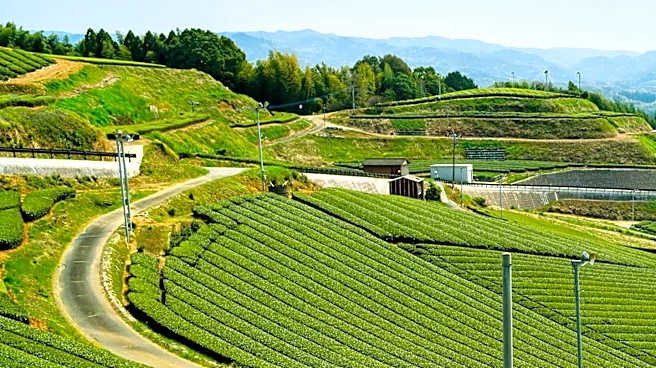
Luke Larson, founder and CEO of Vale Farms on Whidbey Island near Seattle, Washington, has embarked on a new venture to cultivate tea plants for matcha production. This initiative comes in response to a significant worldwide supply shortage of matcha,
which has seen a surge in global popularity. Vale Farms and its team recently planted their initial 12,000 tea plants, aiming to establish a domestic source for this in-demand product. Larson, a former marketing specialist, is pioneering this effort, exploring the suitability of Washington State's climate for growing matcha tea plants. The project represents a significant step towards localizing matcha production in the United States.
Why It's Important?
This development is important for several reasons. Firstly, it addresses the global supply chain vulnerabilities highlighted by the current matcha shortage, offering a potential solution for consistent availability in the U.S. market. By cultivating tea plants domestically, Vale Farms could reduce reliance on international imports, potentially stabilizing prices and ensuring quality control. This venture also signifies a diversification of agricultural practices in Washington State, potentially opening new economic avenues for local farmers and creating jobs. Furthermore, it caters to the growing consumer demand for locally sourced and sustainably produced goods, aligning with broader trends in the food and beverage industry. Success in this endeavor could inspire similar agricultural innovations across the country.
What's Next?
Vale Farms will focus on nurturing its newly planted tea plants and developing sustainable farming practices suitable for matcha production in Washington State. Future steps will likely involve scaling up operations, refining cultivation techniques, and eventually processing the harvested tea leaves into matcha. The company will also need to navigate the challenges inherent in establishing a new agricultural industry, including climate adaptation, pest control, and market penetration. Potential reactions from stakeholders could include interest from local agricultural bodies, investment from food and beverage companies seeking reliable matcha sources, and engagement from consumers eager for domestically produced matcha. The success of Vale Farms could pave the way for further tea cultivation efforts in other suitable regions of the U.S.
Beyond the Headlines
The establishment of matcha tea farming in Washington State by Vale Farms represents more than just a business venture; it signifies a broader trend towards agricultural innovation and self-sufficiency in the U.S. This initiative challenges traditional notions of where certain crops can be grown, potentially leading to a re-evaluation of agricultural landscapes and opportunities. It also highlights the increasing consumer preference for transparency in food sourcing and the desire for products with a clear origin story. Ethically, local production can reduce the carbon footprint associated with long-distance shipping and support local economies. Culturally, it could introduce new agricultural traditions and expertise to the region, fostering a deeper connection between consumers and their food sources. This pioneering effort could inspire a new wave of specialized crop cultivation across the nation.