





What's Happening?
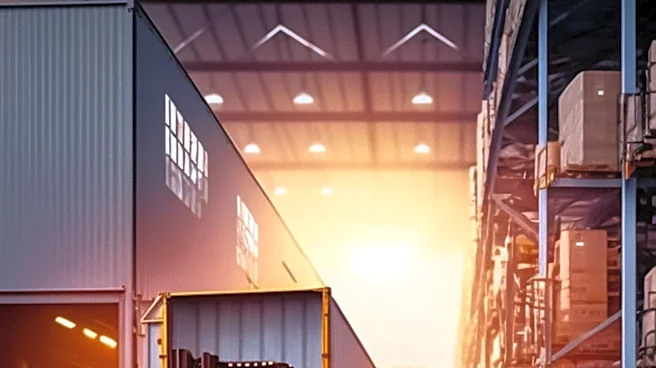
The life sciences industry is grappling with significant challenges in managing supply chain disruptions, primarily due to its highly outsourced nature. A single injectable product, for instance, can involve multiple contract manufacturers, carriers,
3PL warehouses, and several tiers of upstream suppliers across different continents. This complex network makes coordination difficult when disruptions occur, potentially jeopardizing patient care. Experts from Resilinc, Blue Yonder, and Accenture highlighted that while many organizations have strategies in place, execution often falters. Risk insights are frequently siloed in disconnected systems, escalation paths are unclear, and response mechanisms still rely on inefficient methods like email. This leads to organizations knowing what actions to take but being unable to implement them quickly enough. The discussion emphasized the critical need for robust governance models that grant teams the authority to act on decisions, rather than merely recommending them, to accelerate disruption response and improve collaboration.
Why It's Important?
The inefficiencies in the life sciences supply chain have profound implications for public health and the U.S. economy. Delays in responding to disruptions directly impact patient care, potentially leading to shortages of critical medications and medical supplies. Economically, these disruptions can result in significant revenue exposure for companies, increased operational costs due to expedited shipping or alternative sourcing, and damage to brand reputation. The reliance on highly outsourced global supply chains means that events in one part of the world can have immediate and severe consequences in the U.S. market. Furthermore, the lack of clear governance and rapid execution capabilities means that investments in risk management strategies are often undermined, turning potential cost avoidance into actual financial losses. Improving resilience is not just about mitigating risk; it's about ensuring the continuous availability of essential healthcare products and maintaining economic stability within a vital industry.
What's Next?
To address these challenges, experts recommend several key steps. First, organizations should conduct rapid maturity assessments to understand their current resilience capabilities and identify gaps. Second, there's a push to embed robust governance models that enable central coordination with distributed execution, allowing teams closest to suppliers and products to make and implement decisions swiftly. This includes establishing regular cadences for monitoring alerts, tracking mitigations, and conducting post-mortems. Third, the integration of AI-powered solutions is crucial for compressing the timeline from event detection to alert, providing contextualized information about impacted materials and revenue exposure. Finally, multi-tier mapping of supply chains is essential to uncover hidden dependencies and concentration risks, enabling proactive supplier outreach and the development of alternative sourcing strategies. The goal is to move towards a system where signals reliably translate into decisions within hours, ensuring faster response and recovery times.
Beyond the Headlines
The discussion around life sciences supply chain resilience extends beyond immediate operational fixes to deeper ethical and systemic considerations. The inherent patient commitment in this sector means that supply chain failures have direct human consequences, elevating the ethical imperative for robust resilience. The reliance on AI, while a 'game changer,' also highlights the ongoing need for human oversight, particularly in decisions affecting patient outcomes, due to the complexities of validation and data accuracy. This points to a future where technology augments human decision-making rather than fully replacing it. Moreover, the emphasis on multi-tier mapping and understanding hidden dependencies underscores a broader shift towards greater transparency and accountability across global supply networks. This could lead to new regulatory pressures and industry standards aimed at ensuring that critical supply chains are not only efficient but also inherently secure and resilient against a wide array of potential disruptions, from geopolitical events to natural disasters.