




What's Happening?
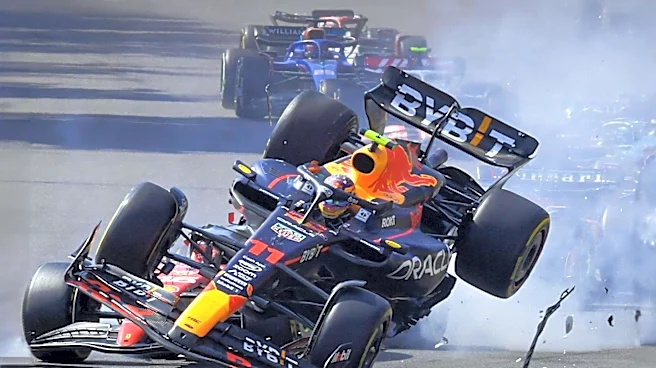
Formula 1 driver Alex Albon has publicly disagreed with Fernando Alonso's assessment of driving standards in the lower third of the grid. The dispute stems from a collision between Albon and Alonso at the Turn 11 hairpin during the Austin Grand Prix,
which damaged Alonso's car. Following the race, Alonso stated that the driving standards in the lower midfield were 'very low.' Albon initially dismissed these comments, but Alonso reiterated his criticism during media day in Mexico City, suggesting that certain drivers understood his remarks. Albon, while expressing respect for Alonso, maintained his stance that he did nothing wrong in the incident and believes the overall skill level across the Formula 1 grid is currently very high. He highlighted that unlike 10-15 years ago, the sport no longer features 'pay drivers,' indicating a more merit-based selection of competitors.
Why It's Important?
This public disagreement between two prominent Formula 1 drivers highlights differing perspectives on driving quality and competitive integrity within the sport. Alonso's comments, coming from a veteran driver, could influence perceptions of newer or less experienced drivers, potentially affecting their reputations or how they are viewed by teams and fans. Albon's defense, supported by other drivers like Charles Leclerc, underscores a belief that the current grid is exceptionally strong, suggesting a high level of competition throughout the field. This debate also touches upon the evolution of Formula 1, particularly the shift away from 'pay drivers,' which Albon argues has elevated the overall talent pool. Such discussions can impact how racing incidents are officiated and how drivers approach on-track battles, potentially influencing future race dynamics and regulations.
What's Next?
The immediate next step will be to observe how Albon and Alonso interact on track in upcoming races, particularly in Mexico, where Albon expressed hope their paths would not cross. The ongoing debate about driving standards may prompt further discussions among drivers, team principals, and the FIA regarding race conduct and penalties. While no formal action is expected from this verbal exchange, it could contribute to a broader conversation about driver accountability and the interpretation of racing incidents. Other drivers may continue to weigh in, either supporting Alonso's view or Albon's defense of the grid's quality, potentially creating factions within the paddock. The incident could also lead to increased scrutiny of midfield battles by race stewards.
Beyond the Headlines
Beyond the immediate on-track rivalry, this exchange reflects a deeper tension between veteran experience and emerging talent in Formula 1. Alonso's critique could be seen as a call for greater discipline or a lament for what he perceives as a decline in certain aspects of race craft, while Albon's response champions the current generation's skill and the sport's meritocratic evolution. The mention of the absence of 'pay drivers' by Albon points to a significant shift in Formula 1's talent acquisition, suggesting that drivers now reach the pinnacle of motorsport primarily through skill rather than financial backing. This evolution could lead to more competitive racing and a higher overall standard, but also potentially more aggressive driving as every driver fights to prove their worth in a highly competitive environment. The debate also subtly questions the subjective nature of 'driving standards' in a sport where aggressive maneuvers are often celebrated.