



What's Happening?
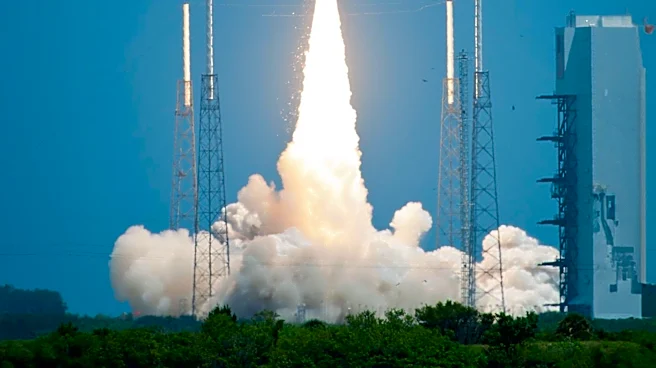
SpaceX successfully launched three AST SpaceMobile satellites from Cape Canaveral, marking a significant step in the company's plan to provide space-based broadband directly to smartphones. The launch is part of AST SpaceMobile's effort to build a constellation
of satellites designed to deliver broadband service to remote areas. The company has agreements with major mobile networks, including AT&T and Verizon, to integrate satellite coverage into their services. The Federal Communications Commission has authorized AST SpaceMobile to operate up to 248 satellites, allowing it to expand its coverage. Despite the progress, the company has delayed its commercial service launch to early 2027, citing the need for additional funding and launch capacity.
Why It's Important?
The launch of AST SpaceMobile satellites represents a significant development in the telecommunications industry, as companies explore new ways to provide coverage in remote and underserved areas. The integration of satellite technology into existing networks could enhance connectivity and offer a safety net for users in areas with limited terrestrial coverage. This development also highlights the competitive landscape in the satellite broadband market, with companies like SpaceX and Amazon vying for market share. The success of these initiatives could lead to increased investment in satellite technology and influence the future of global telecommunications.
What's Next?
AST SpaceMobile plans to continue expanding its satellite constellation, with additional launches scheduled in the coming years. The company is seeking up to $1 billion in funding to support its operations and secure launch capacity. As the satellite broadband market evolves, regulatory developments and technological advancements will play a crucial role in shaping the industry's future. Stakeholders will be watching closely to see how these developments impact the competitive dynamics and service offerings in the telecommunications sector.