







What's Happening?
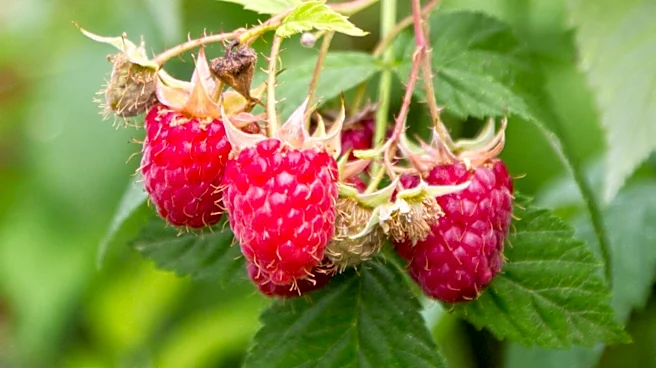
In August, raspberry plants require specific care to ensure a successful harvest. Summer-bearing raspberries are nearing the end of their fruiting season, while fall-bearing varieties are beginning to ripen. Key tasks for gardeners include harvesting
ripe fruits, pruning summer-bearing canes, and tying in stems for support. It is crucial to avoid pruning fall-bearing raspberries at this time to prevent loss of fruit. Additionally, maintaining soil moisture, removing weeds, and protecting fruits from birds are essential practices. These tasks help in managing the growth and productivity of raspberry plants, ensuring a bountiful crop.
Why It's Important?
Proper care of raspberry plants in August is vital for maximizing fruit yield and quality. By following recommended practices, gardeners can extend the fruiting season and improve the health of their plants. Pruning and thinning help in preventing overcrowding, which can hinder fruit production. Ensuring adequate water supply and weed control supports plant health by reducing competition for resources. Protecting fruits from birds ensures that the harvest is not compromised. These efforts contribute to a more productive garden, providing fresh produce for personal consumption or sale, and supporting local food systems.
What's Next?
Gardeners should continue to monitor their raspberry plants throughout the growing season. As fall approaches, attention will shift to preparing plants for winter, which may include additional pruning and mulching. Ongoing maintenance, such as regular watering and pest management, will be necessary to sustain plant health. Gardeners may also consider expanding their raspberry varieties to diversify their harvest and extend the fruiting period. Engaging with local gardening communities or resources can provide additional support and advice tailored to specific regional conditions.