








What's Happening?
Major K-pop agencies are increasingly moving their headquarters out of Gangnam, a district long synonymous with the Korean pop music industry. This trend, which began with JYP Entertainment's relocation in 2018, has seen prominent companies like SM Entertainment,
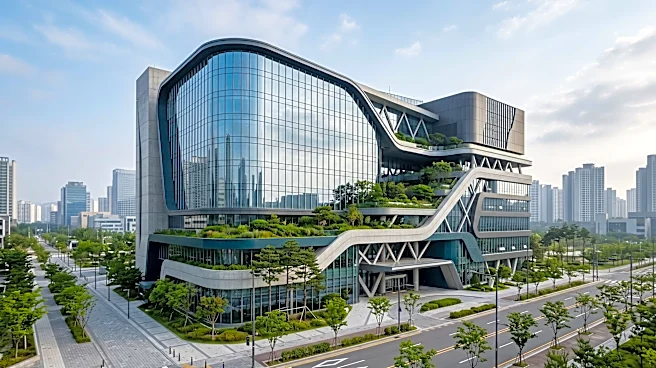
JYP Entertainment, and HYBE (formerly BigHit Music) establish new bases in other areas of Seoul. For instance, SM moved to Seongsu-dong, JYP to Seongnae-dong, and HYBE to Yongsan District. This shift is driven by a desire for independence and the establishment of self-sufficient cultural hubs, as agencies now integrate production and artist management facilities within their own headquarters, reducing reliance on external infrastructure. While some smaller agencies, like The Muze Entertainment, are choosing to remain and expand within Gangnam, the overall movement indicates a significant change in the K-content industry landscape over the past five years. The new locations often offer better transportation links and the ability to create bespoke environments for artists and production.
Why It's Important?
This exodus from Gangnam signifies a maturation and decentralization of the K-pop industry. Historically, Gangnam was the central hub due to its concentration of essential services like recording studios, hair and makeup salons, and fashion brands. However, as K-pop has evolved into a global cultural phenomenon, major agencies have grown powerful enough to internalize these services. This move allows them greater control over their production processes, potentially leading to increased efficiency and a more integrated approach to artist development and content creation. The shift also reflects a changing perception within the industry; being based in Gangnam is no longer seen as a prerequisite for legitimacy or success. This decentralization could foster the development of new cultural centers across Seoul, diversifying the industry's geographical footprint and potentially creating new economic opportunities in previously less-explored districts.
What's Next?
The trend of K-pop agencies establishing self-contained cultural hubs outside traditional entertainment districts is likely to continue. This could lead to further development in areas like Gwangjin District, Seongdong District, and Yongsan District, as more companies seek to consolidate their operations and create environments tailored to their specific needs. The focus will increasingly be on creating comprehensive facilities that house recording studios, practice rooms, offices, and even hair and makeup services under one roof. This strategic relocation is expected to enhance production efficiency and provide artists with greater privacy and convenience. The changing criteria for choosing headquarters, moving from location-centric to environment-centric, suggests a long-term shift in how K-pop agencies operate and expand, potentially influencing urban development and infrastructure in various parts of Seoul.
Beyond the Headlines
The relocation of K-pop agencies from Gangnam highlights a broader evolution in the entertainment industry, where companies are increasingly prioritizing vertical integration and self-sufficiency. This move away from a centralized hub reflects a desire for greater autonomy and the ability to craft unique brand identities through their physical spaces. It also underscores the immense growth and financial power of these agencies, enabling them to invest in extensive in-house facilities. This trend could inspire similar shifts in other global entertainment sectors, where established centers might see a decentralization as companies seek to optimize operations and create distinct corporate cultures. Furthermore, the transformation of former legal districts into K-pop hubs illustrates how urban spaces can be repurposed and revitalized by dynamic cultural industries, leading to unexpected urban planning and economic development outcomes.