









What's Happening?
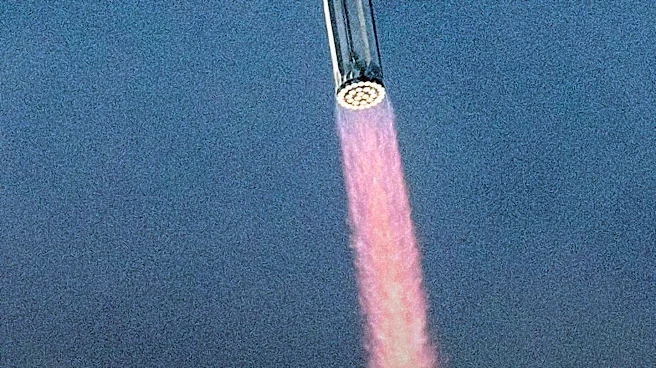
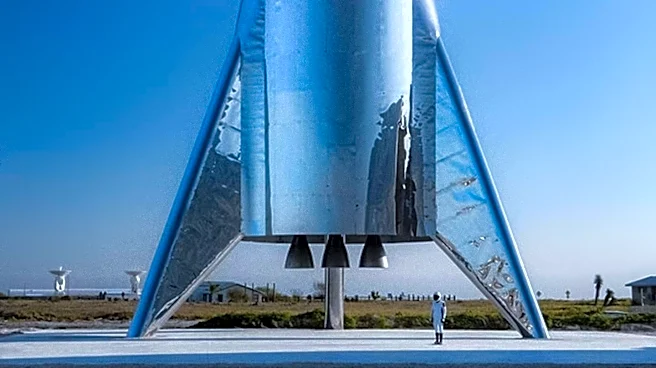
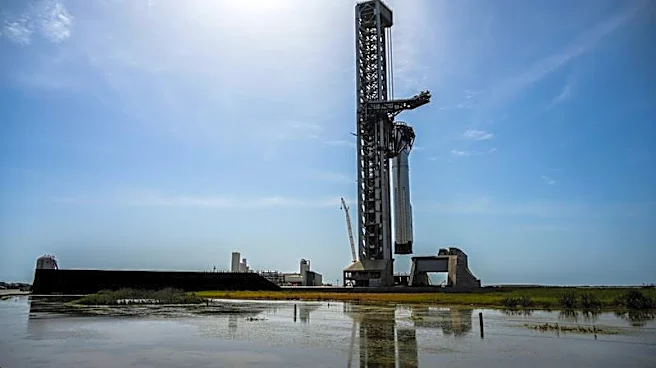
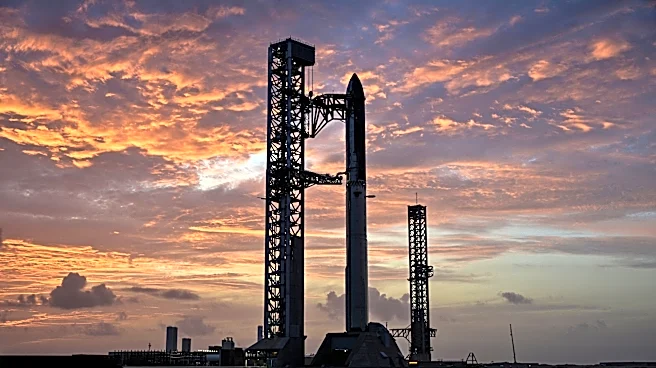
SpaceX's attempt to launch its Starship Flight 13 was aborted at the last moment due to a failure in four Raptor engines on Booster 20, which did not ignite at T-zero. This incident occurred at Starbase, Texas, and was confirmed by Elon Musk shortly after
the abort. The mission was intended to be a significant milestone as it was set to carry the first 'V3' Starlink satellites, which are designed to enhance per-satellite bandwidth. Despite this setback, SpaceX continues its operations with the Starlink fleet, which has launched 12,552 satellites, with 10,848 currently in orbit and 10,832 functioning normally. A new launch attempt is expected in the coming days as engineers work to identify and resolve the engine-related issue.
Why It's Important?
The aborted launch of Starship Flight 13 is significant as it highlights the challenges SpaceX faces in its ambitious plans to expand its satellite internet service through the deployment of V3 Starlink satellites. These satellites are crucial for increasing bandwidth and improving service quality. The delay could impact SpaceX's timeline for enhancing its satellite network, which is a key component of its business strategy. Additionally, the incident raises questions about the reliability of the Raptor engines, which are critical for the success of future missions. The outcome of the investigation into the engine failure will be closely watched by industry stakeholders and could influence future launch schedules and SpaceX's operational strategies.
What's Next?
SpaceX is expected to conduct a thorough investigation into the engine failure to determine the root cause. Once the issue is resolved, a new launch attempt will be scheduled. The successful deployment of the V3 Starlink satellites is crucial for SpaceX's plans to enhance its satellite internet service. The company will also need to address any potential concerns from stakeholders regarding the reliability of its technology. In the meantime, SpaceX continues to operate its existing Starlink fleet, maintaining its position in the competitive satellite internet market.