






What's Happening?
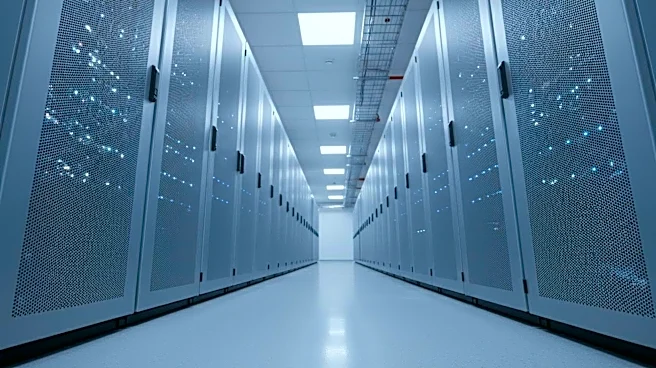
Eaton Corporation, a global power management company, and Trane Technologies plc, a climate solutions company, have collaborated to develop a new system for high-density AI data centers. This partnership aims to address the increasing demand for sophisticated
electrical equipment, liquid cooling, and thermal-management systems as computing density rises in data centers. Their jointly developed reference design is specifically created for Nvidia Corporation's DSX AI Factory architecture. The system integrates Trane’s thermal-management equipment with Eaton’s medium-voltage power-distribution systems. This collaboration seeks to optimize the power and cooling infrastructure required for the rapidly expanding AI data center market. The companies estimate that this design could lead to significant improvements in energy efficiency, cost reduction for installation, and reduced copper usage, although actual results may vary by installation. This standardized approach is also expected to shorten project timelines by streamlining the engineering process for power and cooling systems.
Why It's Important?
This collaboration is significant for the U.S. technology and infrastructure sectors, as it directly addresses critical challenges in the burgeoning AI data center industry. The rapid growth of AI necessitates robust and efficient infrastructure, and the partnership between Eaton and Trane Technologies offers a solution to power and cool these high-density facilities more effectively. By potentially improving energy efficiency by 15%, cutting installation costs by up to 30%, and reducing copper use by 80%, the initiative could lead to substantial economic benefits for data center operators and, by extension, the companies relying on these centers. This development could accelerate the deployment of AI infrastructure across the U.S., supporting technological advancements and economic growth. Furthermore, the standardized approach could mitigate supply chain issues and labor shortages by simplifying complex installations, making it easier for businesses to scale their AI operations. Both companies are also dividend-paying, offering investors a way to capitalize on the AI boom without solely relying on chip stocks.
What's Next?
The newly developed system by Eaton Corporation and Trane Technologies is poised to be implemented in high-density AI data centers, particularly those utilizing Nvidia's DSX AI Factory architecture. The companies anticipate that this standardized approach will lead to faster deployment of new data center capacity, which is crucial given the projected near-tripling of global data center capacity by 2030, with AI driving approximately 70% of this surge. The architecture's adaptability to emerging liquid-cooling and direct-current power technologies suggests future innovations and upgrades will be seamlessly integrated. This initiative could set a new industry standard for data center infrastructure, influencing how other companies design and build their facilities. Both Eaton and Trane Technologies are expected to continue leveraging their strong market positions and financial performance, including consistent dividend payouts, to further invest in and expand their solutions for the AI data center market. Their ongoing financial results and strategic deals, such as Eaton's acquisition of Boyd Thermal, indicate a sustained focus on this growth area.
Beyond the Headlines
Beyond the immediate economic and technological benefits, the partnership between Eaton Corporation and Trane Technologies highlights a broader shift in how critical infrastructure is being developed to support advanced technologies like AI. The emphasis on energy efficiency and reduced material usage (like copper) points to a growing awareness of environmental sustainability within the tech sector. As AI data centers consume vast amounts of energy, innovations that reduce their carbon footprint will become increasingly vital for corporate social responsibility and regulatory compliance. This collaboration also underscores the interconnectedness of various industries—power management, climate solutions, and semiconductor manufacturing—in driving technological progress. The need for specialized solutions for AI infrastructure suggests a future where highly integrated and optimized systems will be the norm, moving away from fragmented approaches. This could lead to new standards for interoperability and efficiency across the entire data center ecosystem, impacting everything from urban planning to energy policy.