




What's Happening?
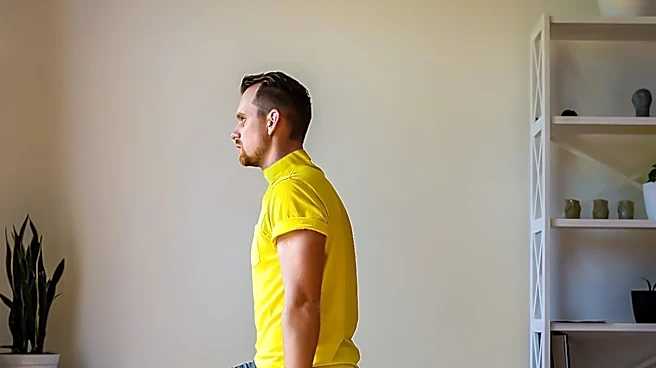
Karena Wu, a doctor of physical therapy and Start TODAY trainer, advocates for the standing backward bend as the single most important exercise for individuals over the age of 50. She recommends performing this exercise multiple times daily to enhance
spine mobility and alleviate back pain. The exercise involves standing straight, leaning backward, and placing hands on the lower back while swinging hips forward and back, maintaining an arched lower back. Wu emphasizes that the back and spine support the body's entire weight, and prolonged sedentary lifestyles can lead to muscle tightening and soreness in the glutes, hips, and hamstrings, all connected to the spine. Restoring and maintaining mobility is crucial as aging often brings changes in the ability to move freely, balance, and strength.
Why It's Important?
This recommendation is significant for public health, particularly for the aging U.S. population, as back pain is a widespread issue, affecting two-thirds of individuals. A sedentary lifestyle, common in many modern professions, contributes to weak and aching lower backs, leading to difficulties with twisting, reaching, and overall mobility. By promoting a simple, accessible exercise like the standing backward bend, Dr. Wu offers a proactive approach to mitigate these age-related mobility challenges. Improving spine mobility can enhance the quality of life for older adults, potentially reducing reliance on more intensive medical interventions for chronic back pain. This can lead to a healthier, more active senior population, reducing healthcare burdens and promoting independent living.
What's Next?
Individuals over 50 are encouraged to incorporate the standing backward bend into their daily routines, potentially multiple times a day, as suggested by Dr. Wu. This advice aligns with broader health recommendations that emphasize consistent, low-impact exercises for maintaining physical well-being. Physical therapists and healthcare providers may increasingly recommend such simple, at-home exercises as part of preventative care and pain management strategies. The focus on spine mobility could also influence fitness programs and wellness initiatives targeting older adults, encouraging a shift towards exercises that prioritize flexibility and core strength alongside traditional cardio and strength training.
Beyond the Headlines
The emphasis on a single, accessible exercise like the standing backward bend highlights a broader trend in health and wellness: the search for simple, effective interventions that can be easily integrated into daily life. This approach democratizes fitness, making it less dependent on specialized equipment or gym memberships, and more about consistent, mindful movement. It also underscores the importance of preventative care and the long-term benefits of maintaining mobility and strength as one ages. The recommendation implicitly challenges the notion that complex routines are always necessary for significant health improvements, suggesting that foundational movements can have profound impacts on overall well-being and independence in later life.