




What's Happening?
The New York Knicks, now operating as a standalone public company, MSG Knickerbockers Corp. (MSGK), are set to incur substantial tax liabilities starting in 2027. This change stems from a federal tax rule, Section 162(m), which caps the deductible amount
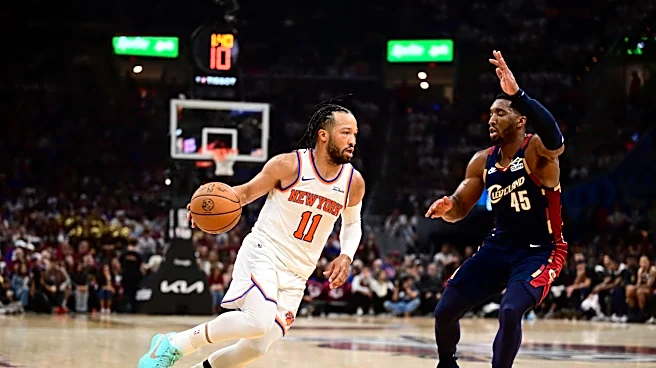
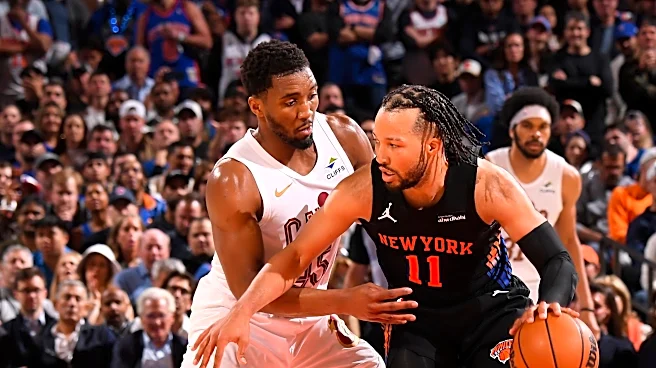
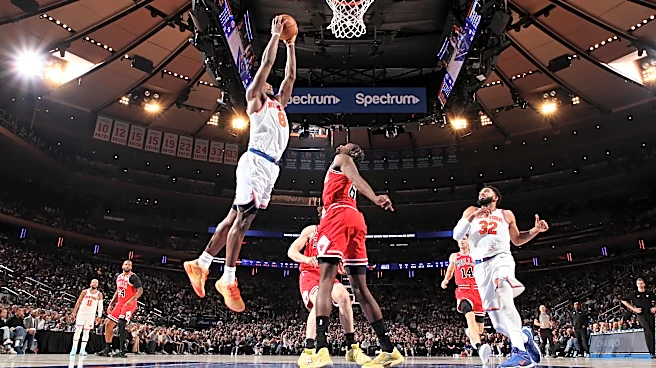
for the five highest-paid employees of a public company at $1 million each. Previously, this rule primarily applied to corporate executives, but an expansion in March 2021, as part of the American Rescue Plan Act, extended it to cover any five highest-paid employees, regardless of their executive status. For the Knicks, this means their top-earning players, including Karl-Anthony Towns, Jalen Brunson, OG Anunoby, Mikal Bridges, and Josh Hart, will trigger this tax. Seaport Research analyst David Joyce projects that this rule will result in an additional $55.4 million in taxes for the Knicks, with nearly 90% of that amount attributable to player salaries. This tax burden will not affect privately owned NBA teams like the Boston Celtics or Oklahoma City Thunder.
Why It's Important?
This tax development significantly alters the financial landscape for the New York Knicks and could influence their player acquisition and retention strategies. The additional $55.4 million in taxes directly impacts the team's profitability and operational budget, making player contracts more expensive. This is particularly relevant as the team considers extensions for key players like Karl-Anthony Towns, whose potential maximum extension would coincide with the implementation of this tax rule. The situation highlights a unique disadvantage for publicly traded sports franchises compared to their privately owned counterparts, creating an uneven playing field in terms of financial flexibility. The increased cost of player salaries could force the Knicks to make difficult decisions regarding roster construction, potentially limiting their ability to compete for top-tier talent or retain their current stars without incurring substantial financial penalties.
What's Next?
The new tax rule will first impact the Knicks' fiscal year beginning July 1, 2027, which corresponds to the 2027-28 NBA season. This timing is critical as it aligns with Karl-Anthony Towns' $61 million player option and Josh Hart's $22.4 million team option. Any long-term extension for Towns, such as a potential four-year, $276 million maximum deal, would fall directly under this new tax regime, making it significantly more costly for the Knicks. The team's front office will need to strategize how to navigate these increased costs while remaining competitive and adhering to salary cap restrictions, such as the NBA's second apron. This could lead to more cautious spending, a greater reliance on draft picks, or innovative contract structures to mitigate the tax impact. The situation may also prompt discussions within the league about the financial implications of public ownership for sports franchises.
Beyond the Headlines
This situation underscores a broader implication of corporate tax law intersecting with professional sports. The expansion of Section 162(m) to include non-executive employees, such as highly paid athletes, reveals how tax legislation can have unintended consequences across various industries. It raises questions about fairness and competitive balance in leagues where some teams are publicly traded and others are not. This could potentially lead to a re-evaluation of ownership structures within professional sports or lobbying efforts to amend tax laws that disproportionately affect publicly owned teams. Furthermore, it highlights the increasing financial complexities faced by sports franchises, where business decisions are not solely driven by on-court performance but also by intricate tax codes and market dynamics. The Knicks' experience could serve as a case study for other sports organizations considering public offerings.