





What's Happening?
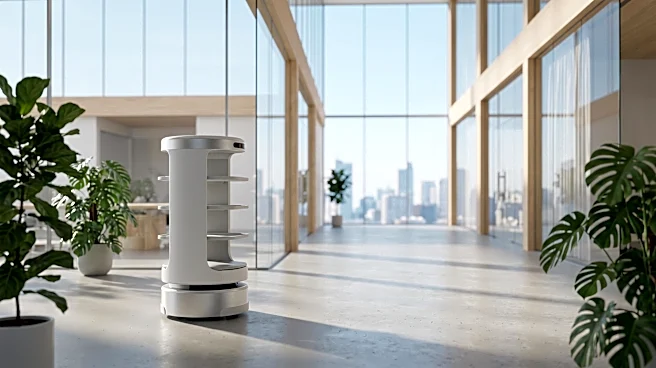
The World Customs Organization (WCO) Harmonized System Committee (HSC) has determined that indoor serving robots should be classified under Harmonized System (HS) heading 8428. This classification covers 'other lifting, handling, loading, or unloading
machinery.' Previously, there was consideration to classify these robots under heading 8709, which pertains to self-propelled work trucks used exclusively for short-distance transport in specific industrial environments like factories or warehouses. The WCO/HSC's decision explicitly excludes serving robots used in restaurants and other catering environments from heading 8709, thereby placing them under heading 8428. This decision has led to updates in national customs guidance, with Taiwan's Customs Administration already aligning its interpretation of the HS to reflect this WCO ruling. The WCO regularly revises its HS explanatory notes to accommodate new products and technologies, guiding member customs administrations in tariff classifications.
Why It's Important?
This reclassification by the WCO is significant for international trade and the burgeoning robotics industry. A consistent classification for serving robots ensures uniformity in how these products are declared and the tariff treatment they receive when traded across borders. For U.S. businesses involved in manufacturing, importing, or exporting serving robots, this decision provides clarity on customs procedures and potential duties. Without a clear and consistent classification, companies could face unpredictable tariffs, delays, and administrative burdens, hindering the global expansion of robotic technologies. The decision highlights the evolving nature of customs systems, which must adapt to the rapid introduction of new technologies into commercial environments. It also underscores the WCO's role in maintaining a standardized global trade language, which is crucial for facilitating legitimate trade and preventing disputes among member countries.
What's Next?
Following the WCO's decision, other member customs administrations, including potentially U.S. Customs and Border Protection (CBP), are expected to review and update their national classification guidance for indoor serving robots to align with the new standard. This alignment will ensure consistency in tariff application and customs procedures globally. Manufacturers and distributors of serving robots will need to ensure their product declarations adhere to the updated HS heading 8428 to avoid customs issues. The WCO will continue to monitor emerging technologies and their impact on trade, likely leading to further revisions and clarifications in the Harmonized System as new innovations enter the market. This ongoing adaptation is essential for customs systems to keep pace with technological advancements and the complexities of modern global commerce.
Beyond the Headlines
The WCO's decision on serving robot classification reflects a broader trend of how traditional regulatory frameworks are grappling with the rapid advancement and commercialization of artificial intelligence and robotics. As robots move beyond industrial settings into everyday commercial and service environments, customs authorities face the challenge of categorizing these novel products within existing systems. This process involves not only technical classification but also an implicit acknowledgment of the changing landscape of labor and commerce. The ethical and economic implications of widespread robot adoption, such as potential impacts on human employment and the definition of 'machinery' in an increasingly automated world, are subtly embedded in these classification decisions. The need for international bodies like the WCO to proactively address these technological shifts is critical for maintaining stability and predictability in global trade, while also prompting deeper discussions about the societal integration of advanced technologies.