
What's Happening?
AST SpaceMobile, a U.S.-based space technology company, and Rakuten Group, Inc. have established a joint venture named Rakuten AST, Inc. This new entity, formed on November 6, 2026, aims to construct a direct-to-device
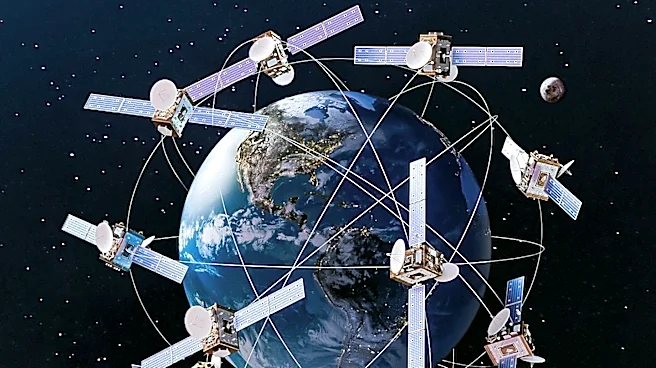
(D2D) satellite communications network in Japan. The network will utilize low Earth orbit (LEO) satellites to provide 4G and 5G connectivity directly to standard, unmodified mobile devices, particularly in areas lacking terrestrial coverage. The Ministry of Internal Affairs and Communications (MIC) in Japan selected a joint proposal from Rakuten's preparatory company and Rakuten Mobile for the 'J-LEO: Japan Low Earth Orbit Satellite Communications Project.' Rakuten AST is slated to receive up to 148 billion yen (approximately $1 billion USD) in support over about three years through this project. The joint venture will deploy and manage satellites compatible with mid-band spectrum, with the goal of commencing domestic operations by the end of March 2029. This initiative is designed to enhance Japan's communication infrastructure, especially for disaster resilience.
Why It's Important?
This joint venture signifies a critical advancement in global connectivity, demonstrating the increasing recognition of space-based cellular broadband as a vital complement to traditional wireless infrastructure. For AST SpaceMobile, this partnership validates its technology and expands its global footprint, leveraging capacity that can also be utilized outside Japan. The project aims to achieve 100% broadband availability, ensuring connectivity in remote areas and during emergencies like natural disasters. By establishing a framework for emergency inter-carrier roaming among mobile network operators, Japan's communication resilience will be significantly bolstered. The ability to provide high-speed internet connectivity, including video streaming and social media, on off-the-shelf smartphones without specialized equipment represents a major leap for consumers and businesses. Furthermore, the project's focus on AI edge computing and AI-driven spectrum management technology could lead to higher-speed data communications and industry-specific solutions in sectors like logistics, infrastructure monitoring, construction, and agriculture.
What's Next?
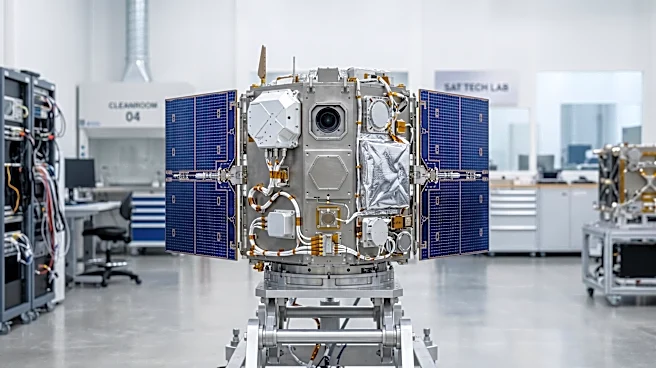
Rakuten AST will proceed with deploying and managing satellites compatible with mid-band spectrum, with the objective of initiating domestic operations in Japan by the end of March 2029. The joint venture plans to work with AST SpaceMobile to extend these services globally, subject to regulatory approvals, beyond their primary use in the Japanese domestic market. Rakuten Mobile intends to begin commercial-environment testing of its satellite-to-mobile service within 2026, building on its strategic partnership with AST SpaceMobile established in March 2020. Both companies will continue to collaborate on advancing the use of AI edge computing and developing AI-driven spectrum management technology to enhance data communications and explore applications for various industries. The establishment of Rakuten AST, with Rakuten Group, Inc. holding 51% voting rights and AST SpaceMobile Japan Holdings II GK holding 49%, is planned for November 2026, focusing on satellite procurement and the operation and management of satellite connectivity.
Beyond the Headlines
The establishment of Rakuten AST highlights a broader trend towards integrating space-based solutions into national critical infrastructure. This move not only addresses connectivity gaps but also reinforces economic security by creating a sovereign D2D constellation managed and operated within Japan. The project's emphasis on disaster resilience underscores a growing global concern for robust communication systems in the face of increasing natural calamities. Ethically, ensuring universal access to broadband can bridge digital divides, fostering greater social equity and economic opportunity. Legally, the deployment of such extensive satellite networks will necessitate careful consideration of international space law, spectrum allocation, and data privacy regulations across multiple jurisdictions. Culturally, the ability to maintain communication during crises can significantly impact community cohesion and recovery efforts, transforming how societies respond to and mitigate large-scale disruptions. This initiative could set a precedent for other nations seeking to enhance their communication independence and resilience.