




What's Happening?
Major U.S. airlines, including Delta, American, and United, are increasingly focusing on premium passengers, offering enhanced services and amenities to those willing to pay more for comfort and exclusivity. This shift has been accelerated by the COVID-19
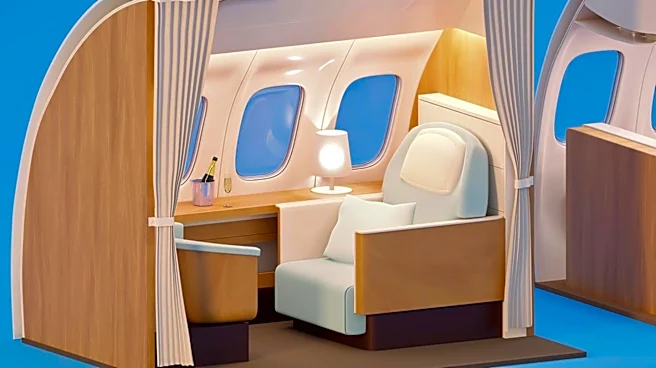
pandemic, which saw a decline in business travel but an increase in leisure travelers willing to splurge on premium seats. Airlines are reconfiguring aircraft to expand premium seating and investing in amenities such as chef-prepared meals and luxury skincare products. Delta's CEO, Ed Bastian, emphasized the need to provide the best service rather than the cheapest, while United's CEO, Scott Kirby, highlighted investments across all customer classes. The strategy marks a significant evolution from past decades when airlines focused on making air travel more accessible.
Why It's Important?
The focus on premium cabins reflects a broader trend in the airline industry towards catering to higher-spending travelers, which could lead to increased revenue for airlines. This strategy may widen the gap between premium and economy passengers, as airlines invest heavily in luxury services for the former. The shift could impact budget-conscious travelers, who may face higher costs and fewer amenities. The emphasis on premium services also highlights the changing dynamics of air travel, where comfort and exclusivity are becoming key differentiators. This trend could influence how airlines allocate resources and design future aircraft, potentially affecting the overall travel experience for different passenger segments.
What's Next?
As airlines continue to invest in premium services, the gap between premium and economy travel experiences is likely to widen. Airlines may further expand premium seating and introduce new amenities to attract high-paying customers. This could lead to increased competition among airlines to offer the most luxurious services, potentially driving innovation in the industry. However, the focus on premium passengers may also prompt discussions about the accessibility and affordability of air travel for the average consumer. Airlines will need to balance their premium strategies with the need to maintain a broad customer base, which could influence future pricing and service decisions.