





What's Happening?
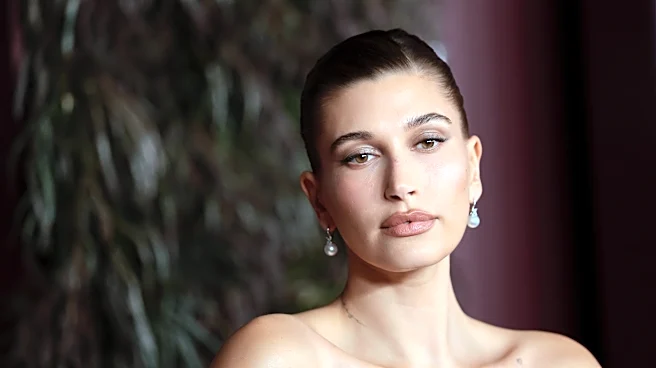
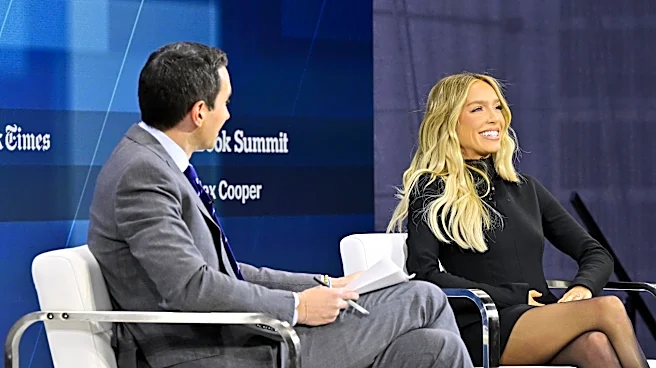
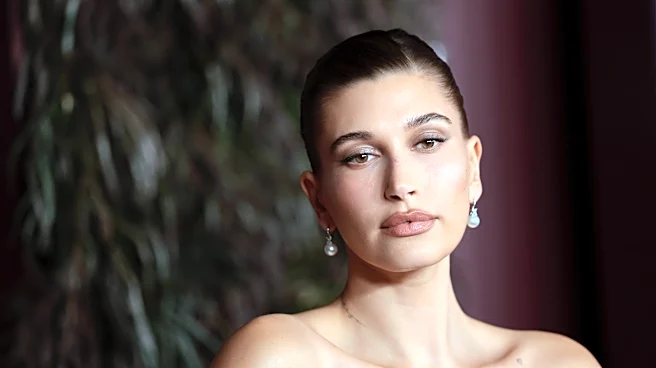
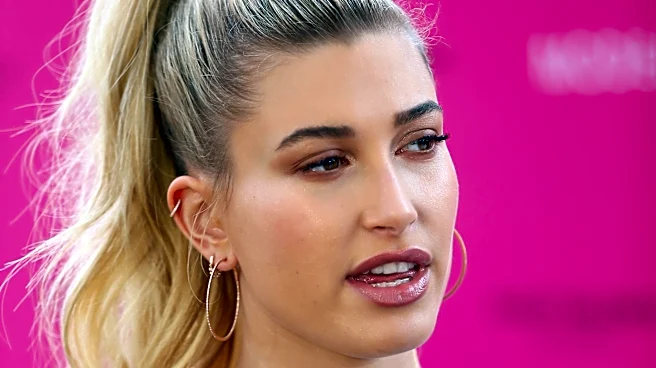
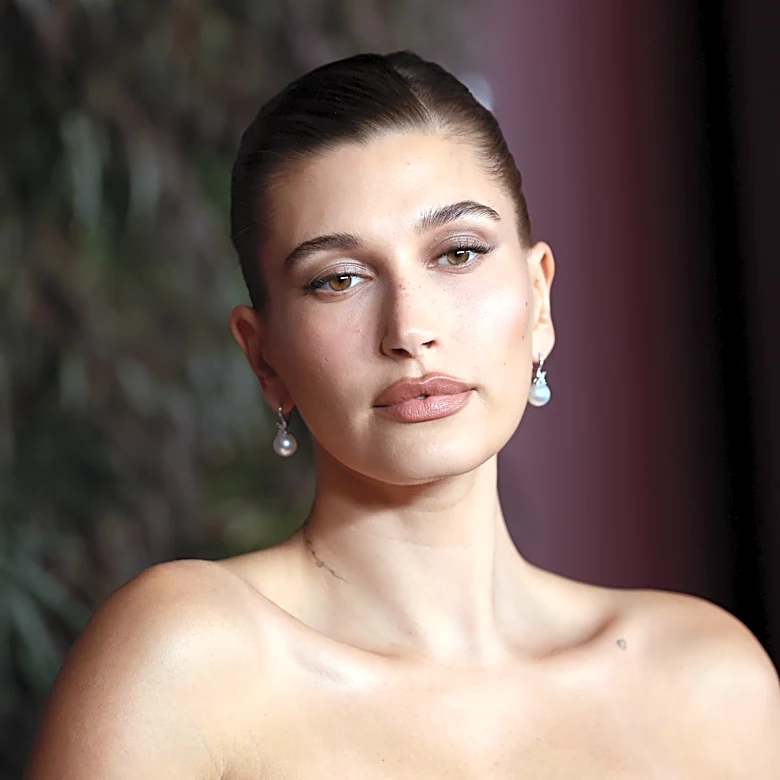
Andrew Ross Sorkin, a columnist and founder of DealBook for The New York Times, conducted an interview with model and entrepreneur Hailey Bieber at the annual DealBook Summit on November 18. The interview, which focused on Bieber's beauty brand Rhode,
drew significant criticism online for Sorkin's line of questioning. Specifically, Sorkin questioned Bieber's confidence in achieving a $1 billion valuation for her brand, asking, 'Really? Why do you think that you could do that?' This particular question ignited a wave of commentary across social media platforms, with many users perceiving it as misogynistic. The discussion quickly shifted from Bieber's business acumen to the perceived bias in how female entrepreneurs, particularly those in the beauty industry, are questioned compared to their male counterparts. The interview also highlighted the ongoing online scrutiny Bieber faces, often related to her relationship with Justin Bieber.
Why It's Important?
This incident is important as it brings to the forefront discussions about journalistic integrity, gender bias in business reporting, and the treatment of public figures, especially women, in professional settings. The backlash against Sorkin's questioning suggests a growing public awareness and intolerance for perceived condescension or skepticism directed at female entrepreneurs. It underscores the challenge women in industries often deemed 'frivolous,' like beauty, face in having their business achievements taken seriously. The debate also reflects broader societal conversations about misogyny and the double standards applied to women in business and public life. For media organizations, it serves as a reminder of the scrutiny their interviewers face and the potential for public relations fallout when perceived biases are displayed.
What's Next?
The immediate aftermath of the interview has seen continued debate on social media and in trade publications regarding the appropriateness of Sorkin's questions. It is likely that this event will contribute to ongoing discussions within journalism about best practices for interviewing entrepreneurs, particularly women, and how to avoid perpetuating gender stereotypes. Media outlets may face increased pressure to review their interview protocols and ensure equitable treatment of all guests. For Hailey Bieber, the incident may further solidify her image as a businesswoman facing undue scrutiny, potentially galvanizing her supporters while also continuing to fuel criticism from detractors. The broader conversation about how female-led businesses are valued and reported on is expected to continue.
Beyond the Headlines
Beyond the immediate controversy, this event touches upon deeper implications concerning the intersection of celebrity, business, and gender. It highlights how public perception of a woman's personal life (in Bieber's case, her marriage to Justin Bieber and past online smear campaigns) can overshadow her professional achievements. The incident also raises questions about the inherent biases within established financial journalism, which may struggle to fully appreciate or validate success in industries traditionally associated with women. This could lead to a re-evaluation of how 'serious' business is defined and reported, potentially pushing for more inclusive narratives that acknowledge the economic power of sectors like beauty and fashion. The public's strong reaction also signals a cultural shift where audiences are increasingly vocal in calling out perceived injustices and biases in media representation.