


What's Happening?
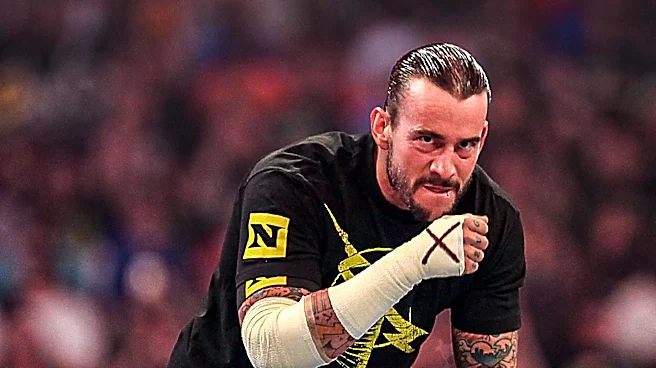
Phillip Brooks, known professionally as CM Punk, a prominent figure in professional wrestling, made a significant career shift from WWE to the Ultimate Fighting Championship (UFC) in 2014. After a public departure from WWE, Punk, despite lacking a background
in competitive martial arts, signed a multi-fight contract with the UFC. He dedicated himself to full-time MMA training at the Roufusport academy in Milwaukee under coach Duke Roufus to prepare for his welterweight debut. His first Octagon appearance was at UFC 203 in September 2016 against Mickey Gall, where he was submitted via rear-naked choke in the first round. Two years later, at UFC 225 in Chicago, Punk faced Mike Jackson, losing by unanimous decision in a bout that was later overturned to a No Contest due to Jackson's positive marijuana test. His brief MMA career concluded with a record of 0–1 (1 NC), after which he returned to professional wrestling.
Why It's Important?
CM Punk's foray into the UFC was a high-profile experiment that underscored the significant differences between professional wrestling and elite combat sports. His transition garnered immense media attention and fan interest, drawing new eyes to the UFC from the professional wrestling world. However, his performance highlighted the rigorous demands and specialized skills required for success in mixed martial arts, even for a celebrated athlete from another combat-adjacent discipline. This move also sparked discussions about the marketability of crossover athletes and the potential risks involved when individuals without extensive amateur or professional fighting backgrounds enter top-tier MMA promotions. For both the UFC and professional wrestling, it demonstrated the distinct athletic and technical requirements of each sport, influencing future considerations for similar crossover attempts.
What's Next?
Following his UFC tenure, CM Punk has returned to professional wrestling, indicating a re-focus on the sport where he achieved widespread fame. His experience in the UFC is likely to remain a significant part of his career narrative, potentially influencing how he is perceived by fans and promoters in professional wrestling. For the UFC, the outcome of Punk's fights may lead to more cautious approaches when considering signing athletes from non-MMA backgrounds, emphasizing the importance of prior combat sports experience. The broader implications for combat sports could include continued debate on the balance between entertainment value and competitive integrity when recruiting crossover talent. His story serves as a case study for future athletes contemplating similar transitions between different sports disciplines.
Beyond the Headlines
CM Punk's journey from WWE to UFC and back touches upon deeper themes of personal challenge, public perception, and the pursuit of new ambitions. His decision to enter the highly competitive world of MMA, despite his age and lack of traditional fighting background, showcased a willingness to step outside his comfort zone and test his limits on a global stage. This narrative resonates beyond sports, speaking to the universal human desire for self-improvement and the courage required to face formidable challenges. It also highlights the cultural fascination with crossover athletes and the often-unrealistic expectations placed upon them. The public's reaction, ranging from admiration for his bravery to criticism of his performance, reflects broader societal attitudes towards risk-taking and the definition of success in high-stakes environments.