



What's Happening?
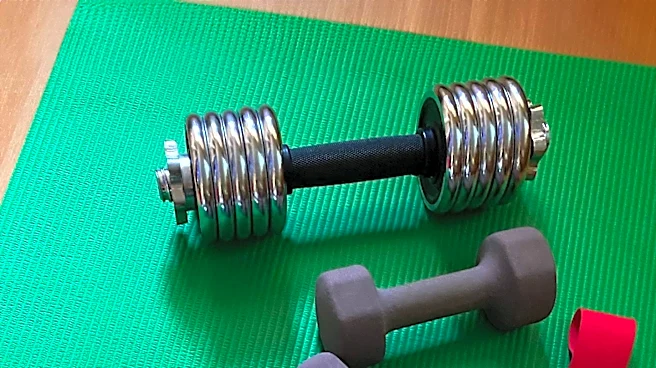
Adjustable dumbbells are gaining traction as a versatile and space-saving alternative to traditional fixed dumbbells, particularly for home gym setups. These innovative fitness tools allow users to modify the weight by selecting different plates or utilizing
mechanisms like dials, pins, or rotating handles. This design consolidates the functionality of multiple fixed dumbbell pairs into a single, compact system. While offering significant economic advantages by reducing the need for an entire rack of weights, adjustable dumbbells require careful handling. Unlike their fixed counterparts, they are generally not designed to withstand frequent dropping due to their internal mechanisms, which can misalign or damage components. Manufacturers often do not provide explicit drop ratings, emphasizing the need for controlled placement after use. The market offers various designs, including selectorized dumbbells, block-style systems, and plate-loaded handles, each with distinct characteristics regarding speed of weight change, shape, and durability. For instance, selectorized models offer quick changes and a familiar shape but involve more complex internal mechanisms, while plate-loaded handles are robust but slower to adjust.
Why It's Important?
The rise of adjustable dumbbells significantly impacts the home fitness market by making strength training more accessible and efficient for individuals with limited space and budget. For many home gym enthusiasts, the primary barrier to acquiring a comprehensive set of weights is the substantial cost and physical footprint of numerous fixed dumbbells. Adjustable dumbbells address these concerns directly, allowing users to achieve a broad range of resistance levels with a single piece of equipment. This innovation democratizes access to varied strength training routines, enabling more people to engage in progressive overload without significant financial or spatial investment. However, the trade-off in durability and the potential for slower weight changes can influence workout efficiency, especially for advanced training protocols like drop sets or circuits. The choice between adjustable and fixed dumbbells therefore hinges on individual training styles, available space, and budget, highlighting a critical decision point for consumers in the evolving home fitness landscape. The compatibility of accessories, such as the BowFlex SelectTech Adjustable Dumbbell Stand, further enhances the utility and organization of these systems.
What's Next?
The trend towards compact and versatile home gym equipment is likely to continue, with manufacturers focusing on improving the durability and user experience of adjustable dumbbells. Future developments may include enhanced drop resistance, more intuitive and faster weight adjustment mechanisms, and designs that more closely mimic the feel and balance of fixed dumbbells across all weight settings. We can also anticipate a greater emphasis on hybrid solutions, where consumers might opt for one heavy adjustable pair complemented by a few frequently used fixed pairs. This approach would leverage the benefits of both types of equipment, optimizing for both space efficiency and training performance. As the home fitness market matures, consumer demand for robust, reliable, and adaptable equipment will drive innovation, potentially leading to new materials and engineering solutions that mitigate the current limitations of adjustable dumbbells, making them an even more compelling choice for a wider range of users.
Beyond the Headlines
Beyond their practical benefits, the proliferation of adjustable dumbbells reflects a broader shift in consumer behavior towards personalized and convenient fitness solutions. This trend is driven by factors such as busy lifestyles, the desire for privacy, and the increasing cost of gym memberships. The ability to perform diverse strength training exercises at home, without sacrificing significant space or incurring prohibitive costs, empowers individuals to take greater control over their health and wellness journeys. This shift also raises questions about the long-term impact on commercial gyms, which may need to adapt their offerings to remain competitive against increasingly sophisticated home setups. Furthermore, the emphasis on controlled placement and the lack of drop ratings for adjustable dumbbells underscore a critical aspect of product design and consumer education: balancing innovation with user safety and equipment longevity. As technology advances, the integration of smart features, such as digital weight tracking or guided workouts, could further enhance the appeal and functionality of adjustable dumbbells, transforming them from mere weight-changing tools into integral components of a connected home fitness ecosystem.