





What's Happening?
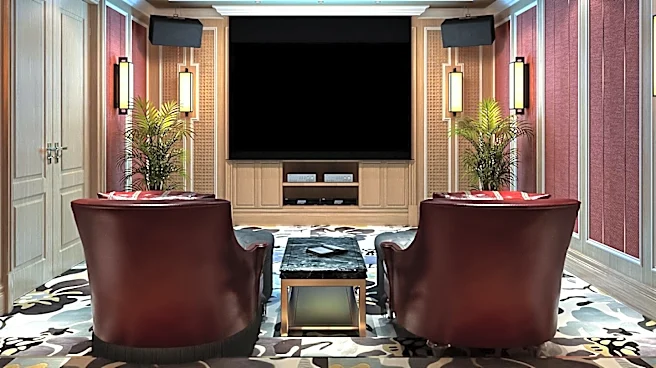
ArtVoom has outlined key design principles for creating stylish and functional multifunctional media rooms. The company emphasizes the integration of creativity, functionality, and personal taste in these spaces, which are increasingly used for gaming,
streaming, and movie nights. Essential features highlighted include comfortable seating, a quality sound system, a large screen or projector, and versatile lighting. ArtVoom suggests incorporating storage solutions for equipment and media, along with flexible layouts to accommodate various activities. The design approach focuses on dynamic wall designs, such as geometric gaming wall ideas and wooden wall panels, to enhance aesthetics and acoustics. Expressive lighting solutions, including pendant and ambient lighting, are also recommended to create adaptable environments. The company also advises on furniture and decor enhancements, such as IKEA Besta Wood Overlays and indoor plants, to balance technology with natural elements.
Why It's Important?
The trend towards multifunctional media rooms reflects a broader shift in how U.S. consumers utilize their living spaces, moving beyond single-purpose rooms to integrated entertainment and relaxation hubs. This evolution impacts the home design and electronics industries, driving demand for versatile furniture, advanced audio-visual equipment, and smart home technologies. For consumers, these designs offer enhanced lifestyle flexibility and efficiency, allowing a single space to serve multiple needs, from family movie nights to individual gaming sessions. The emphasis on personalized entertainment spaces also highlights a growing desire for customization in home environments, influencing product development and marketing strategies for manufacturers and retailers in the home goods and consumer electronics sectors. The integration of acoustic enhancements and smart lighting further underscores the importance of creating immersive and adaptable user experiences.
What's Next?
As consumer demand for multifunctional spaces continues to grow, the home design and technology industries are likely to see further innovation in integrated solutions. This could include more modular furniture designs, advanced smart home systems that seamlessly control lighting, sound, and visual elements, and new materials that offer both aesthetic appeal and functional benefits like improved acoustics. Retailers may begin to offer more curated packages for media room setups, combining furniture, electronics, and decor. Additionally, the focus on personalization suggests a future where AI-driven design tools could help consumers visualize and customize their multifunctional spaces more easily, leading to a more tailored and efficient design process. The market for home entertainment and flexible living solutions is expected to expand, with companies like ArtVoom continuing to provide guidance and products for these evolving needs.
Beyond the Headlines
The rise of multifunctional media rooms points to a deeper cultural shift towards home-centric entertainment and work-life integration. As remote work and digital entertainment become more prevalent, the home is increasingly becoming the primary hub for various activities. This trend raises questions about the long-term impact on public spaces and commercial entertainment venues, as more people opt for personalized, high-quality experiences within their own homes. Ethically, the increasing reliance on technology in these spaces could lead to discussions about digital well-being and screen time, particularly for families. From a design perspective, the challenge lies in creating spaces that are not only technologically advanced but also promote comfort, relaxation, and social interaction, balancing the digital with the human element. This evolution in home design reflects a broader societal adaptation to a more connected and flexible lifestyle.