


What's Happening?
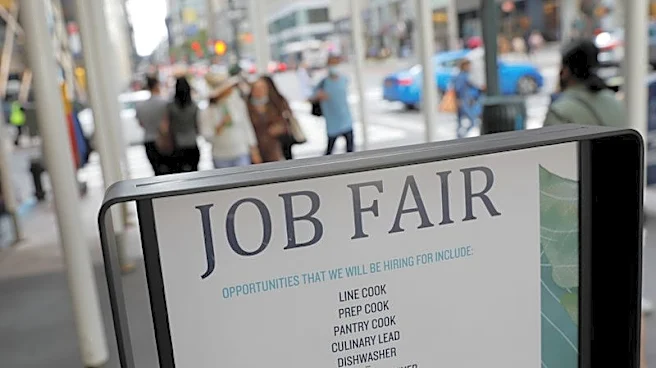
The Federal Reserve's anticipated interest rate hike in September is now uncertain following a disappointing July jobs report. The report revealed a loss of 23,000 jobs, prompting a reassessment of the labor market's strength. The Labor Department also
revised down hiring data for May and June by 103,000 jobs. This unexpected downturn complicates the Fed's dual mandate of maximizing employment and stabilizing consumer prices. The probability of the Fed holding rates steady in September has increased to 56%, up from 45% the previous day, according to CME FedWatch. The central bank typically cuts rates to stimulate the economy when the labor market weakens, but it is also grappling with elevated inflation, which is usually countered by raising rates.
Why It's Important?
The Fed's decision on interest rates is crucial for the U.S. economy, impacting consumer borrowing, business investment, and inflation control. A weaker labor market could lead to a pause in rate hikes, affecting economic growth and employment. Inflation remains a concern, as it continues to outpace wage gains, squeezing American workers. The Fed's challenge is to balance these competing priorities, with potential implications for economic stability and public confidence. The outcome of the Fed's decision will influence financial markets, consumer spending, and business planning.
What's Next?
The Fed will closely monitor upcoming economic data, including the Consumer Price Index report, to inform its decision. The report, expected on August 12, may show a slight easing of inflation. The central bank must weigh the need to support a weakening job market against the imperative to control inflation. Economists are divided, with some predicting rate hikes later in the year to prioritize inflation control. The Fed's actions will be scrutinized by policymakers, businesses, and the public, as they navigate economic uncertainties.